

Hantsoo, K., & Lau, K. V. (2026). Unsteady Gypsum Cycling as a Driver of Cryptic Perturbations in the Ancient Carbon Cycle. Paleoceanography and Paleoclimatology, 41(4), None. doi:10.1029/2025pa005367
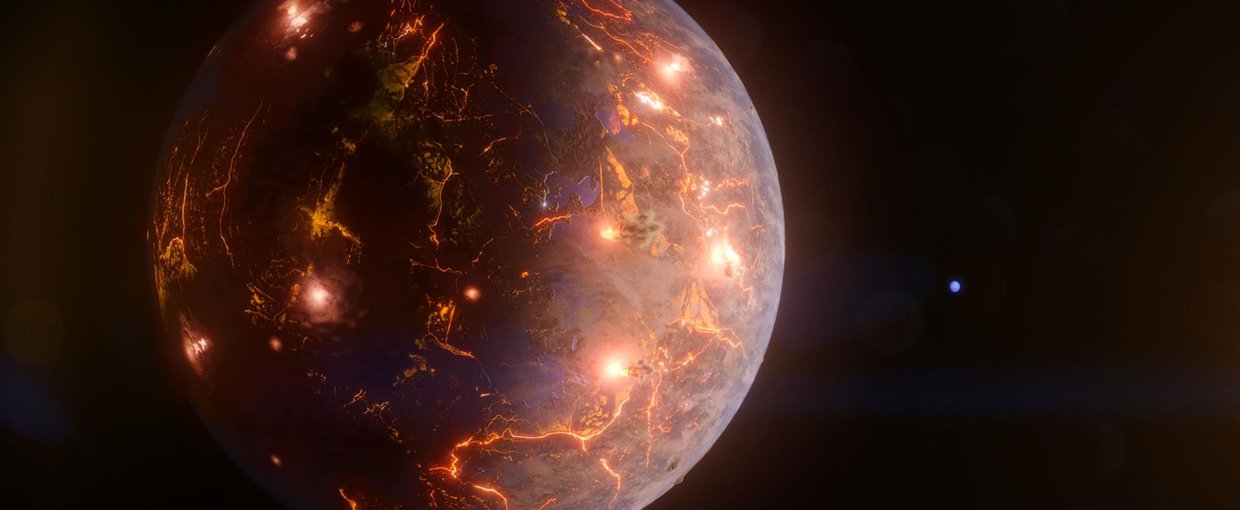
Peláez-Torres, A., Pozuelos, F. J., Morello, G., Dévora-Pajares, M., Barkaoui, K., Gkouvelis, L., … Lang, F. Z. (2026). A gem system with a lava world and a habitable zone sub-Neptune orbiting TOI–1752. Monthly Notices of the Royal Astronomical Society. doi:10.1093/mnras/stag713
Sanyal, S., Wang, G., Lin, Q., Shih, T., Ghate, A., Mukhopadhyay, S., … Pasayat, S. S. (2026). Demonstration of 2.71% External Quantum Efficiency at 630 nm in Singular 2 μm Red InGaN Micro‐LEDs on Porous GaN for AR/VR Applications. Advanced Photonics Research, 7(4), None. doi:10.1002/adpr.202500264
Seya, K., Brownless, A-L., Kamerlin, S. C. L., & Longo, L. M. (2026). The borderlands of foldability: lessons from simplified proteins. Trends in Chemistry. doi:10.1016/j.trechm.2026.03.001
White-Gianella, H. T., & Krissansen-Totton, J. (2026). Carbon Cycle Imbalances on Arid Terrestrial Planets with Implications for Venus. The Planetary Science Journal, 7(4), 79. doi:10.3847/psj/ae4faa
Liu, J. (2026). Intelligent Planetary Rock Mechanics: Machine Learning Pathways for Characterising Rock Mass Behaviour Beyond Earth. Rock Mechanics and Rock Engineering. doi:10.1007/s00603-026-05506-y
Herrero Perez, M. J., Shelley, J. T., Cody, R. B., & Rogers, K. L. (2026). Analytical Characterization Approaches to Measure Prebiotically Relevant Compounds in High Salinity Impact-Induced Hydrothermal Systems. ACS Earth and Space Chemistry. doi:10.1021/acsearthspacechem.5c00272
Novák, L. V. F., Muñoz‐Gómez, S. A., Ciobanu, M., Van Beveren, F., Eme, L., López‐GarcíA, P., & Moreira, D. (2026). Nucleomorph phylogenomics suggests a deep and ancient origin of cryptophyte plastids within Rhodophyta. New Phytologist. doi:10.1111/nph.71116
Tomko, P., Ovando-Ovando, C. I., Boussagol, P., Santiago-Martínez, M. G., & Visscher, P. T. (2026). Methanogens Through Time and Space: Impact on Earth’s Planetary Evolution and Biogeochemistry. Geosciences, 16(4), 144. doi:10.3390/geosciences16040144
Asche, S., Bautista, C., Blanco, C., Boulesteix, D., Champagne-Ruel, A., Mathis, C., … Xavier, J. C. (2026). What it takes to solve the origin of life: An integrated review. Part 1–Experimental methods and data repositories. Cell Reports Physical Science, None, 103212. doi:10.1016/j.xcrp.2026.103212