

Haqq-Misra, J. (2024). Escaping the Great Filter: The Future of Civilization and the Search for Technosignatures. Proceedings of the International Astronomical Union, 20(S387), 167–177. doi:10.1017/s1743921324001455
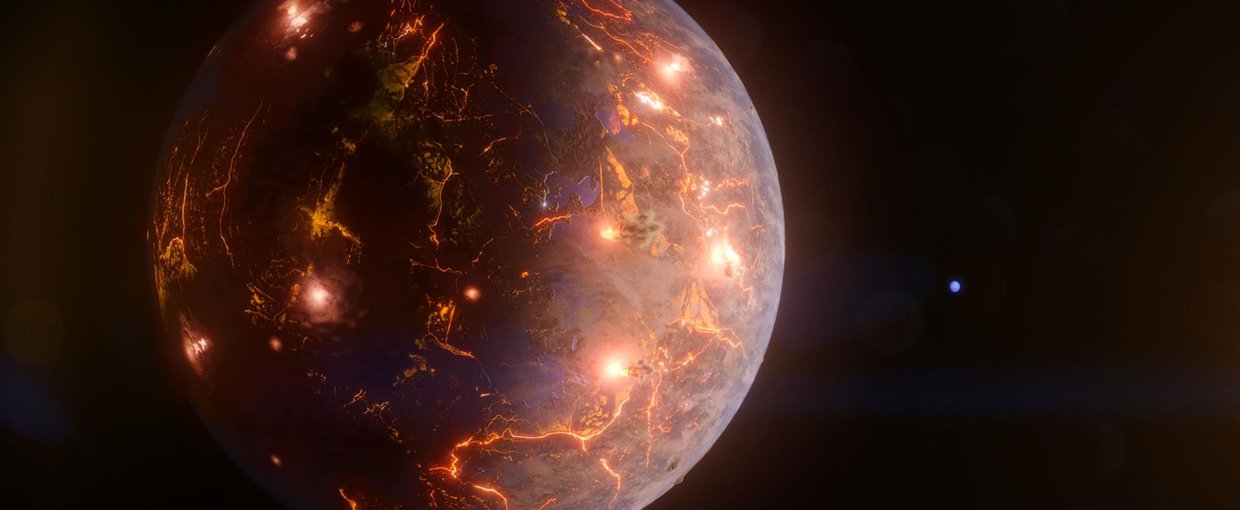
Nicholls, H., Pierrehumbert, R. T., Lichtenberg, T., Soucasse, L., & Smeets, S. (2024). Convective shutdown in the atmospheres of lava worlds. Monthly Notices of the Royal Astronomical Society, 536(3), 2957–2971. doi:10.1093/mnras/stae2772
Amritkar, K., Cuevas-ZuviríA, B., & Kaçar, B. (2024). Evolutionary Dynamics of RuBisCO: Emergence of the Small Subunit and its Impact Through Time. Molecular Biology and Evolution, 42(1), None. doi:10.1093/molbev/msae268
Mccandless, H. K., Droser, M. L. (2024) Deconstructing Taphonomy to Reconstruct the Morphology and Life Habit of Attenborites Janeae at Nilpena Ediacara National park. Palaios, 39(11). doi:10.2110/palo.2023.005
Young, E. D., Stixrude, L., Rogers, J. G., Schlichting, H. E., & Marcum, S. P. (2024). Phase Equilibria of Sub-Neptunes and Super-Earths. The Planetary Science Journal, 5(12), 268. doi:10.3847/psj/ad8c40
Ballouz, R-L., Agrusa, H., Barnouin, O. S., Walsh, K. J., Zhang, Y., Binzel, R. P., … Tang, Y. (2024). Shaking and Tumbling: Short- and Long-timescale Mechanisms for Resurfacing of Near-Earth Asteroid Surfaces from Planetary Tides and Predictions for the 2029 Earth Encounter by (99942) Apophis. The Planetary Science Journal, 5(11), 251. doi:10.3847/psj/ad84f2
Saunders, W. R., Person, M. J., Withers, P., French, R. G., & Tubthong, C. (2024). The Upper Atmosphere of Uranus from Stellar Occultations. II. Revised Temperatures in the Upper Stratosphere and Lower Thermosphere. The Planetary Science Journal, 5(11), 247. doi:10.3847/psj/ad7c4d
Stern, J. C., Graham, H., Burcar, B., Martin, E. S., Noell, A. C., Hand, K. P., … Vance, S. D. (2024). A Comprehensive Framework for Assessing Terrestrial Analogue Field Sites for Ocean Worlds. None. doi:10.22541/au.173083435.54133409/v1
Vincent, L. N., Fayolle, E. C., Hodyss, R., Johnson, P. V., & Noell, A. C. (2024). Bacterial spore morphology remains highly recognizable after exposure to simulated Enceladus and Europa surface conditions. Communications Earth & Environment, 5(1), None. doi:10.1038/s43247-024-01872-z
Kovalick, A., Heard, A. W., Johnson, A. C., Chan, C. S., Ootes, L., Nielsen, S. G., … Bekker, A. (2024). Living in Their Heyday: Iron‐Oxidizing Bacteria Bloomed in Shallow‐Marine, Subtidal Environments at ca. 1.88 Ga. Geobiology, 22(6), None. doi:10.1111/gbi.70003