

Cruz-Diaz, G. A., Erickson, S. E., Silveira, E. F. d., Ricca, A., De Barros, A. L. F., Da Costa, C. A. P., … Mattioda, A. L. (2019). PAH Products and Processing by Different Energy Sources. The Astrophysical Journal, 882(1), 44. doi:10.3847/1538-4357/ab311f
Johnson, A. C., Aarons, S. M., Dauphas, N., Xike Nie, N., Zeng, H., Helz, R. T., … Anbar, A. D. (2019). Titanium Isotopic Fractionation in Kilauea Iki Lava Lake Driven by Oxide Crystallization. Geochimica et Cosmochimica Acta. doi:10.1016/j.gca.2019.08.022
Yadav, M., & Krishnamurthy, R. (2019). Bis(dimethylamino)phosphorodiamidate: A Reagent for the Regioselective Cyclophosphorylation of cis-Diols Enabling One-Step Access to High-Value Target Cyclophosphates. Organic Letters. doi:10.1021/acs.orglett.9b02694
Haqq-Misra, J. (2019). Does the Evolution of Complex Life Depend on the Stellar Spectral Energy Distribution? Astrobiology. doi:10.1089/ast.2018.1946
Kane, S. R., Arney, G., Crisp, D., Domagal‐Goldman, S., Glaze, L. S., Goldblatt, C., … Zahnle, K. J. (2019). Venus as a Laboratory for Exoplanetary Science. Journal of Geophysical Research: Planets, 124(8), 2015–2028. doi:10.1029/2019je005939
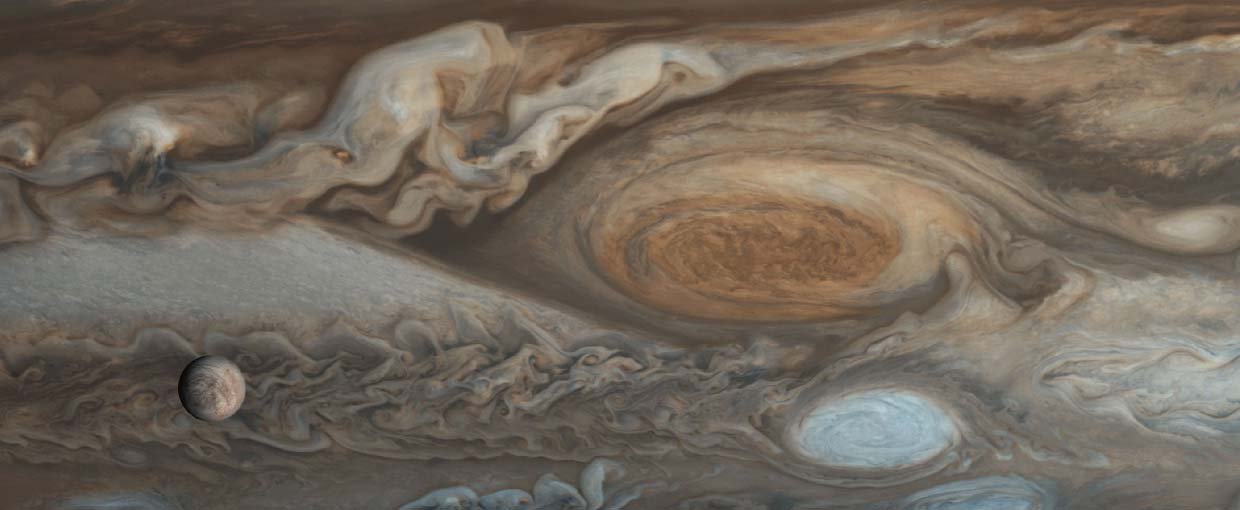
Liu, S-F., Hori, Y., Müller, S., Zheng, X., Helled, R., Lin, D., & Isella, A. (2019). The formation of Jupiter’s diluted core by a giant impact. Nature, 572(7769), 355–357. doi:10.1038/s41586-019-1470-2
Seales, J., Lenardic, A., & Moore, W. B. (2019). Assessing the Intrinsic Uncertainty and Structural Stability of Planetary Models: 1. Parameterized Thermal‐Tectonic History Models. Journal of Geophysical Research: Planets, 124(8), 2213–2232. doi:10.1029/2019je005918
Buongiorno, J., Herbert, L. C., Wehrmann, L. M., Michaud, A. B., Laufer, K., Røy, H., … Lloyd, K. G. (2019). Complex Microbial Communities Drive Iron and Sulfur Cycling in Arctic Fjord Sediments. Applied and Environmental Microbiology, 85(14), None. doi:10.1128/aem.00949-19
Mutter, A. C., Tyryshkin, A. M., Campbell, I. J., Poudel, S., Bennett, G. N., Silberg, J. J., … Falkowski, P. G. (2019). De novo design of symmetric ferredoxins that shuttle electrons in vivo. Proceedings of the National Academy of Sciences, 116(29), 14557–14562. doi:10.1073/pnas.1905643116
Shollenberger, Q. R., Wittke, A., Render, J., Mane, P., Schuth, S., Weyer, S., … Brennecka, G. A. (2019). Combined mass-dependent and nucleosynthetic isotope variations in refractory inclusions and their mineral separates to determine their original Fe isotope compositions. Geochimica et Cosmochimica Acta. doi:10.1016/j.gca.2019.07.021