

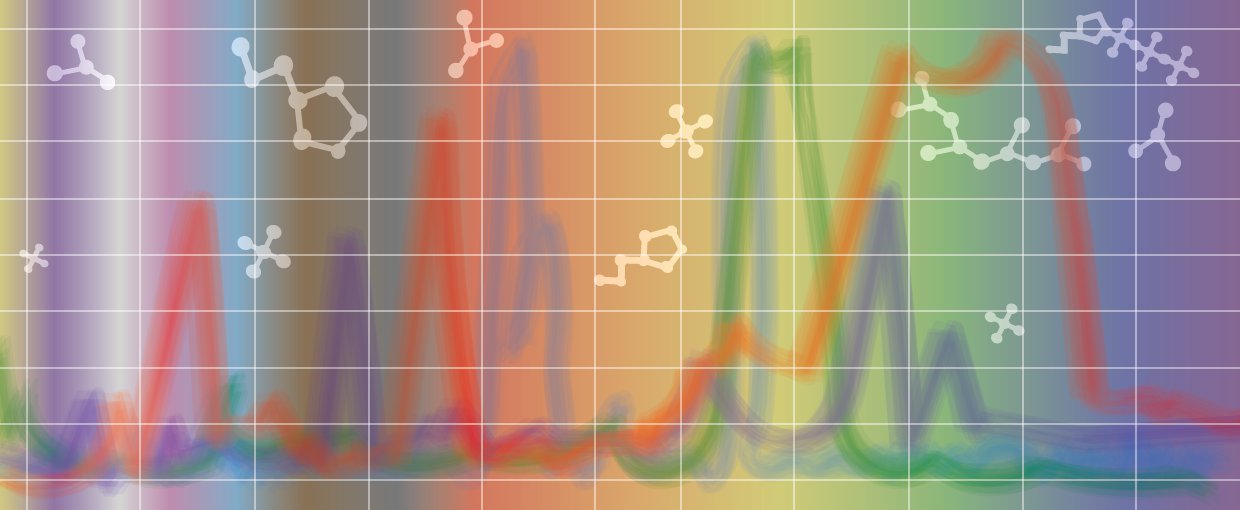
Robinson, T. D., & Salvador, A. (2023). Exploring and Validating Exoplanet Atmospheric Retrievals with Solar System Analog Observations. The Planetary Science Journal, 4(1), 10. doi:10.3847/psj/acac9a
Singh, V., McCarthy, C., Silvia, M., Jakuba, M. V., Craft, K. L., Rhoden, A. R., … Koczynski, T. A. (2023). Surviving in Ocean Worlds: Experimental Characterization of Fiber Optic Tethers across Europa-like Ice Faults and Unraveling the Sliding Behavior of Ice. The Planetary Science Journal, 4(1), 1. doi:10.3847/psj/aca3ab
Steckloff, J. K., Sarid, G., & Johnson, B. C. (2023). The Effects of Early Collisional Evolution on Amorphous Water Ice Bodies. The Planetary Science Journal, 4(1), 4. doi:10.3847/psj/aca75a
Bodewits, D., Xing, Z., Saki, M., & Morgenthaler, J. P. (2023). Neil Gehrels–Swift Observatory’s Ultraviolet/Optical Telescope Observations of Small Bodies in the Solar System. Universe, 9(2), 78. doi:10.3390/universe9020078
Castillo‐Rogez, J., Weiss, B., Beddingfield, C., Biersteker, J., Cartwright, R., Goode, A., … Neveu, M. (2023). Compositions and Interior Structures of the Large Moons of Uranus and Implications for Future Spacecraft Observations. Journal of Geophysical Research: Planets, 128(1), None. doi:10.1029/2022je007432
McCain, K. A., Matsuda, N., Liu, M-C., McKeegan, K. D., Yamaguchi, A., Kimura, M., … Tsuda, Y. (2023). Early fluid activity on Ryugu inferred by isotopic analyses of carbonates and magnetite. Nature Astronomy, 7(3), 309–317. doi:10.1038/s41550-022-01863-0
Matthews, A., Lima-Zaloumis, J., Debes II, R. V., Boyer, G., & Trembath-Reichert, E. (2023). Heterotrophic Growth Dominates in the Most Extremotolerant Extremophile Cultures. Astrobiology. doi:10.1089/ast.2022.0100
Zhao, L. L., Kunovac, V., Brewer, J. M., Llama, J., Millholland, S. C., Hedges, C., … Fischer, D. A. (2023). Author Correction: Measured spin–orbit alignment of ultra-short-period super-Earth 55 Cancri e. Nature Astronomy, 7(3), 366–366. doi:10.1038/s41550-023-01886-1
Kozik, N. P., Young, S. A., Lindskog, A., Ahlberg, P., & Owens, J. D. (2023). Protracted oxygenation across the Cambrian–Ordovician transition: A key initiator of the Great Ordovician Biodiversification Event? Geobiology. doi:10.1111/gbi.12545
Nie, N. X., Wang, D., Torrano, Z. A., Carlson, R. W., O’D. Alexander, C. M., & Shahar, A. (2023). Meteorites have inherited nucleosynthetic anomalies of potassium-40 produced in supernovae. Science, 379(6630), 372–376. doi:10.1126/science.abn1783