

Lenardic, A., & Seales, J. (2019). Different Is More: The Value of Finding an Inhabited Planet That Is Far from Earth2.0. Astrobiology, 19(11), 1398–1409. doi:10.1089/ast.2018.1833
McCubbin, F. M., & Barnes, J. J. (2019). Origin and abundances of H2O in the terrestrial planets, Moon, and asteroids. Earth and Planetary Science Letters, 526, 115771. doi:10.1016/j.epsl.2019.115771
Chan, M. A., Hinman, N. W., Potter-McIntyre, S. L., Schubert, K. E., Gillams, R. J., Awramik, S. M., … Cleaves, H. J. (2019). Deciphering Biosignatures in Planetary Contexts. Astrobiology, 19(9), 1075–1102. doi:10.1089/ast.2018.1903
Kane, S. R., Arney, G., Crisp, D., Domagal‐Goldman, S., Glaze, L. S., Goldblatt, C., … Zahnle, K. J. (2019). Venus as a Laboratory for Exoplanetary Science. Journal of Geophysical Research: Planets, 124(8), 2015–2028. doi:10.1029/2019je005939
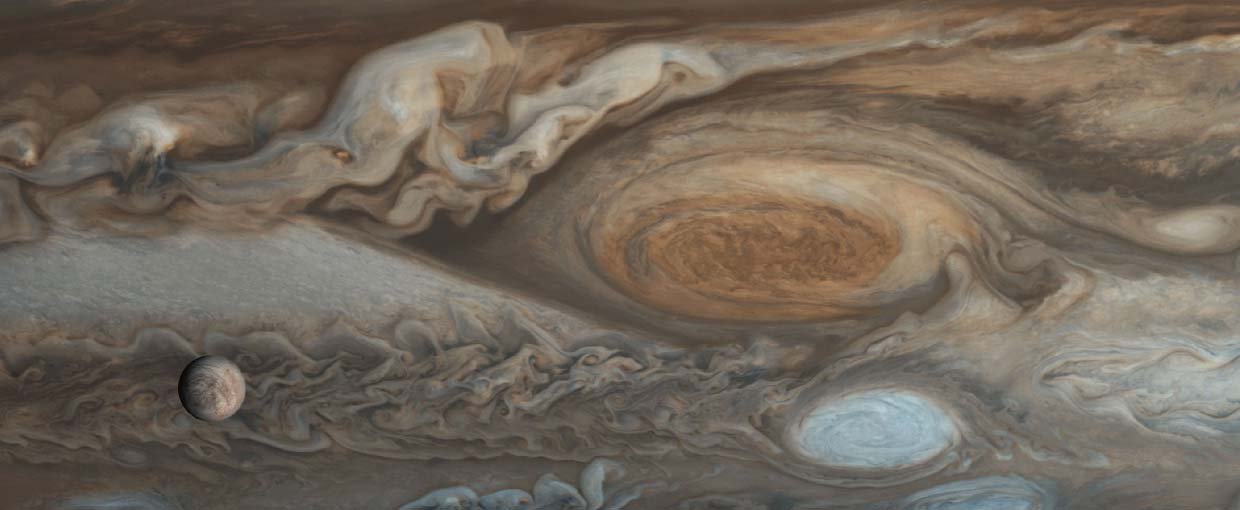
Liu, S-F., Hori, Y., Müller, S., Zheng, X., Helled, R., Lin, D., & Isella, A. (2019). The formation of Jupiter’s diluted core by a giant impact. Nature, 572(7769), 355–357. doi:10.1038/s41586-019-1470-2
Seales, J., Lenardic, A., & Moore, W. B. (2019). Assessing the Intrinsic Uncertainty and Structural Stability of Planetary Models: 1. Parameterized Thermal‐Tectonic History Models. Journal of Geophysical Research: Planets, 124(8), 2213–2232. doi:10.1029/2019je005918
Fuentes, J. J., Crowley, J. W., Dasgupta, R., & Mitrovica, J. X. (2019). The influence of plate tectonic style on melt production and CO2 outgassing flux at mid-ocean ridges. Earth and Planetary Science Letters, 511, 154–163. doi:10.1016/j.epsl.2019.01.020
Grewal, D. S., Dasgupta, R., Holmes, A. K., Costin, G., Li, Y., & Tsuno, K. (2019). The fate of nitrogen during core-mantle separation on Earth. Geochimica et Cosmochimica Acta, 251, 87–115. doi:10.1016/j.gca.2019.02.009
Bajgain, S. K., Mookherjee, M., Dasgupta, R., Ghosh, D. B., & Karki, B. B. (2019). Nitrogen Content in the Earth's Outer Core. Geophysical Research Letters, 46(1), 89–98. doi:10.1029/2018gl080555
Grewal, D. S., Dasgupta, R., Sun, C., Tsuno, K., & Costin, G. (2019). Delivery of carbon, nitrogen, and sulfur to the silicate Earth by a giant impact. Science Advances, 5(1), None. doi:10.1126/sciadv.aau3669