

March 26, 2019
Research Highlight
Looking at Laboratory Techniques for Lipid Analysis
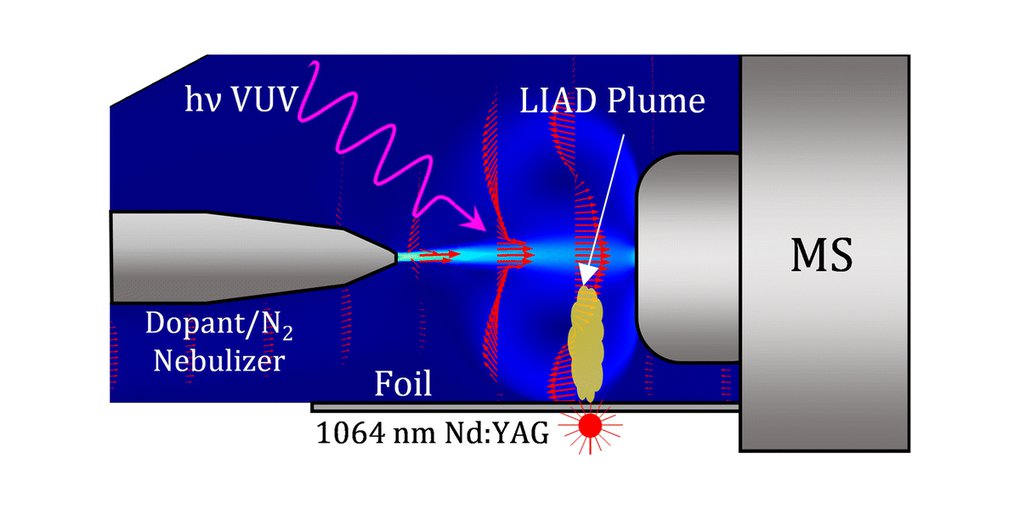
A graphical abstract of "Sweep Jet Collection Laser-Induced Acoustic Desorption Atmospheric Pressure Photoionization for Lipid Analysis Applications."Image credit: Benham et al. (2019), doi: 10.1007/s13361-018-2118-4.
A recent study explores the usefulness of a technique dubbed LIAD-APPI in detecting apolar lipid compounds in samples. The technique was used with a nebulized sweep jet to identify triacylglycerols, sterols, carboxylic acids, and hopanoids in complex mixtures of olive oil and shale rock extract. This was a demonstration of the applicability of LIAD-APPI with materials that simulate real-world samples. The technique requires little sample preparation, and could be useful in studies of biochemical assays and in geochemical profiling.
The study, “Sweep Jet Collection Laser-Induced Acoustic Desorption Atmospheric Pressure Photoionization for Lipid Analysis Applications,” was published in the journal Journal of The American Society for Mass Spectrometry. The work was performed at the NSF/NASA Center for Chemical Evolution (CCE) at the Georgia Institute of Technology in Atlanta, Georgia. The CCE is a collaborative program supported by the National Science Foundation (NSF) and the NASA Astrobiology Program.