

This website is currently being migrated. For the most up-to-date astrobiology news, resources, and community announcements, please visit our new home at science.nasa.gov/astrobiology

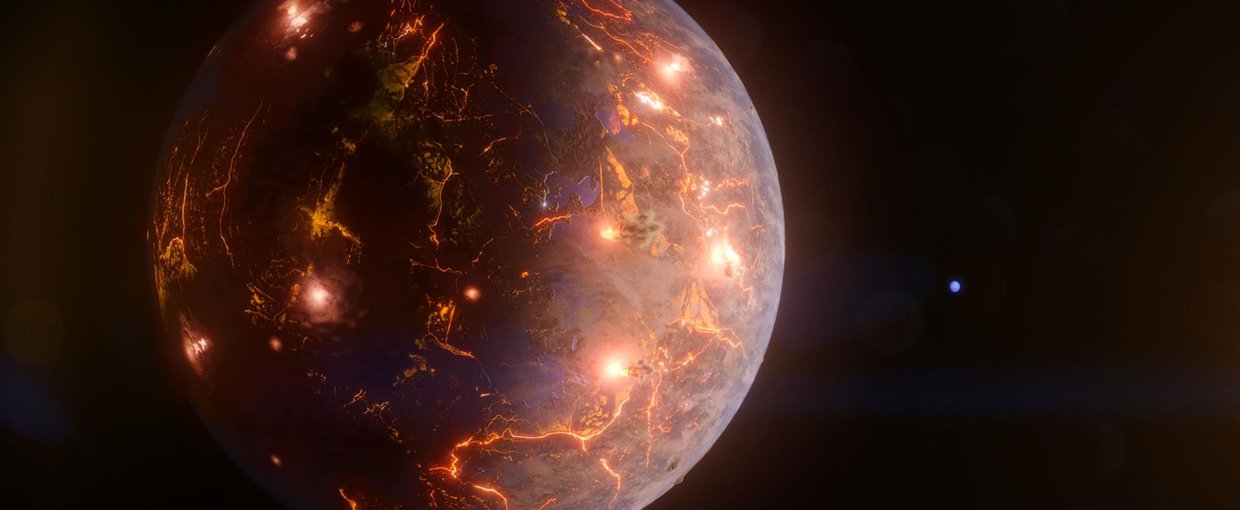
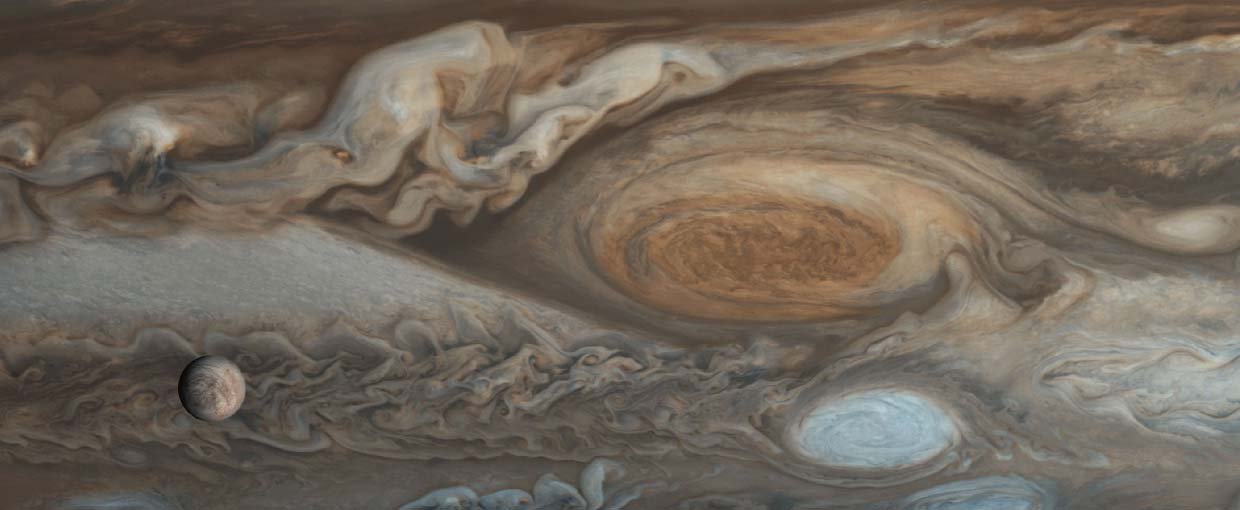
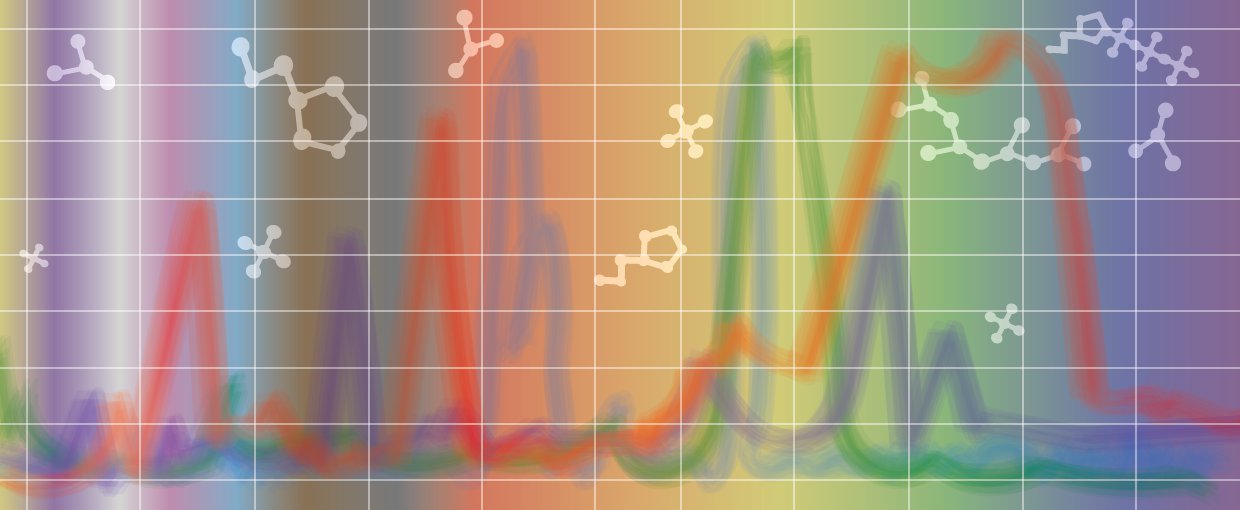
A volcanically active planet is shown in closeup at the left side of the image with glowing eruptions and lines of lava on the surface. To the right and in the distance is a faint blue glowing ball representing the more massive planet in the system.Sixteen frames from Voyager 1's flyby of Jupiter in 1979 were merged to create this image. Jupiter's Great Red Spot is visible in the center. Jupiter's moon Europa can be seen in the foreground at the bottom left of the image.The frame is a horizontal rainbow of color on a grid. Shadows of molecules can be seen through the light as well as the jagged peaks and troughs of spectral lines.
Fizzy Super Earths and Lava Worlds“Fizzy Super-Earths: Impacts of Magma Composition on the Bulk Density and Structure of Lava Worlds.” in The Astrophysical Journal.01/03
Identifying Hydrothermal Activity on Icy Ocean Worlds“Ethene-ethanol ratios as potential indicators of hydrothermal activity at Enceladus, Europa, and other icy ocean worlds.” In Icarus.02/03
NASA Raman Spectroscopic Database"The NASA Raman spectroscopic database: Ramdb version 1.00.” In Icarus.03/03
NextPrevious
Go Explore
May 2021Generalized Stoichiometry and Biogeochemistry for Astrobiological Applications

Kempes, C. P., Follows, M. J., Smith, H., Graham, H., House, C. H., & Levin, S. A. (2021). Generalized Stoichiometry and Biogeochemistry for Astrobiological Applications. Bulletin of Mathematical Biology, 83(7), None. doi:10.1007/s11538-021-00877-5

November 2020In Situ Growth of Halophilic Bacteria in Saline Fracture Fluids from 2.4 km below Surface in the Deep Canadian Shield

Wilpiszeski, R. L., Sherwood Lollar, B., Warr, O., & House, C. H. (2020). In Situ Growth of Halophilic Bacteria in Saline Fracture Fluids from 2.4 km below Surface in the Deep Canadian Shield. Life, 10(12), 307. doi:10.3390/life10120307

October 2020Evaluating Biosignatures for Life Detection

Pohorille, A., & Sokolowska, J. (2020). Evaluating Biosignatures for Life Detection. Astrobiology, 20(10), 1236–1250. doi:10.1089/ast.2019.2151

Microsensors in Icy Environments to Detect Microbial Activities

McGlennen, M., Neubauer, M., Driesler, M., Dieser, M., Foreman, C. M., & Warnat, S. (2020). Microsensors in Icy Environments to Detect Microbial Activities. Journal of Microelectromechanical Systems, 29(5), 853–859. doi:10.1109/jmems.2020.3012420

February 2020Lipid Biomarkers in Ephemeral Acid Salt Lake Mudflat/Sandflat Sediments: Implications for Mars

Johnson, S. S., Millan, M., Graham, H., Benison, K. C., Williams, A. J., McAdam, A., … Achilles, C. (2020). Lipid Biomarkers in Ephemeral Acid Salt Lake Mudflat/Sandflat Sediments: Implications for Mars. Astrobiology, 20(2), 167–178. doi:10.1089/ast.2017.1812

PREV
1...5/6/7/8/9/10
NEXT