

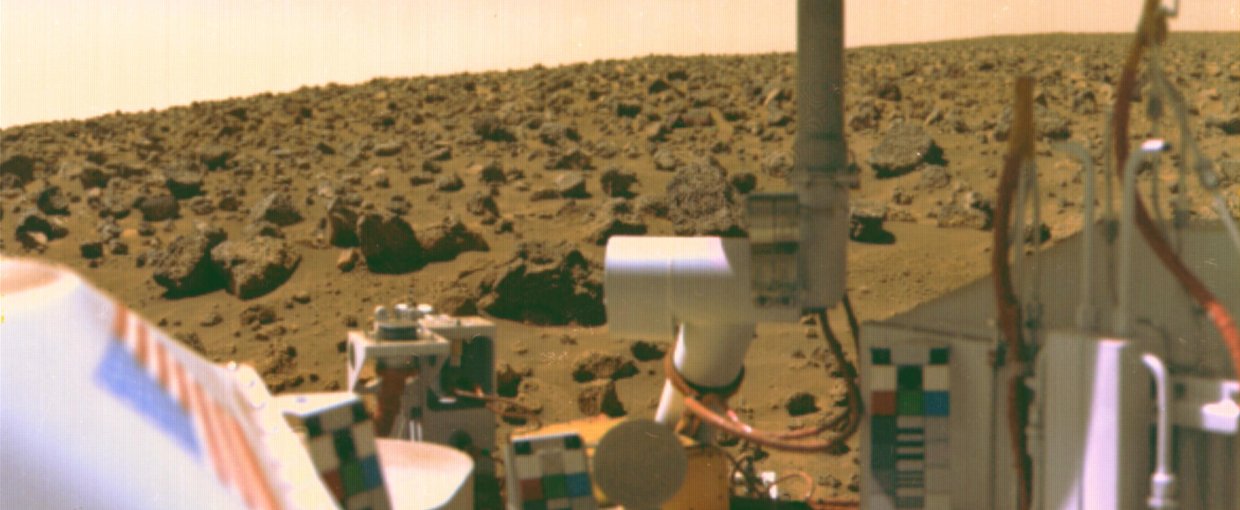
A boulder-strewn field of red rocks stretches across the horizon in this self-portrait of Viking 2 on Mars' Utopian Plain. Image Credit: NASA/JPL NASA/JPL
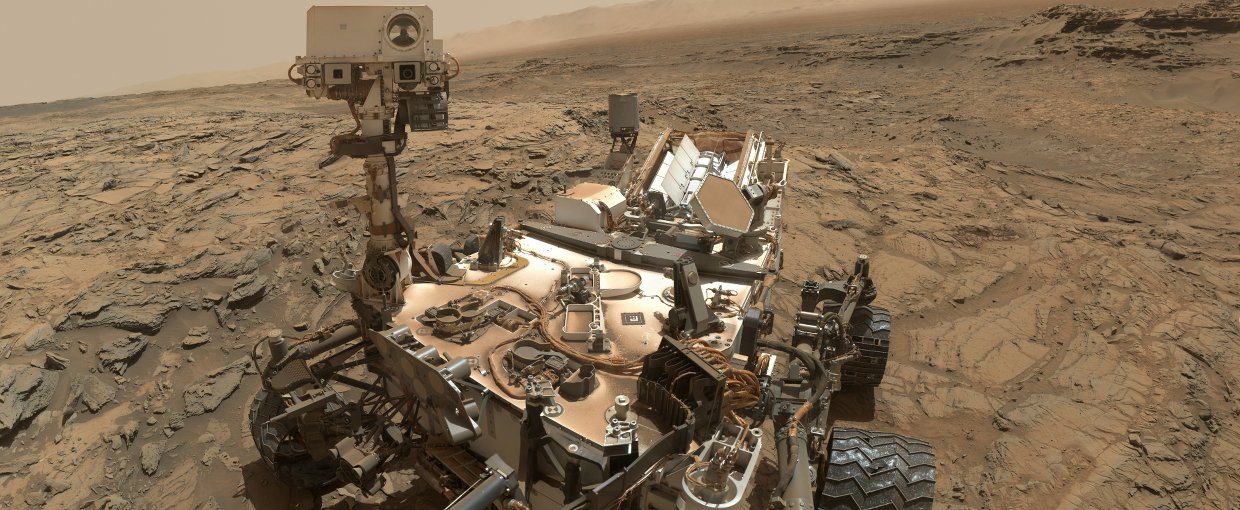
This self-portrait of NASA's Curiosity Mars rover shows the vehicle at the "Big Sky" site, where its drill collected the mission's fifth taste of Mount Sharp. NASA/JPL-Caltech/MSSS
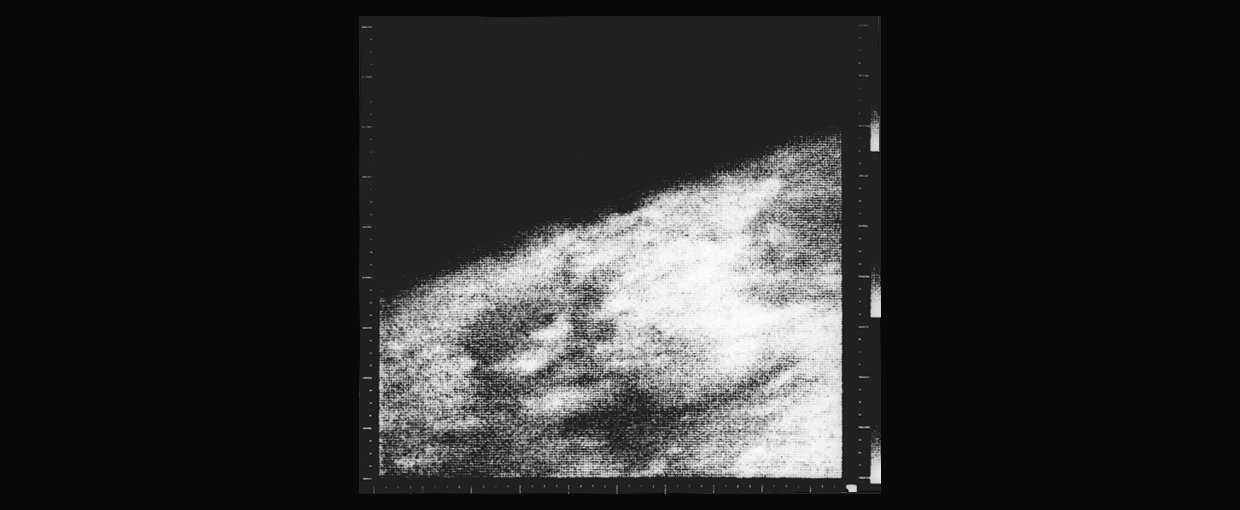
The first close-up image of Mars, from the Mariner 4 spacecraft. Credit: NASANASA
In a new paper, scientists have proposed an alternate evolution for habitable conditions on ancient Mars. Traditionally, habitable conditions are tied to the presence of water and constrained to Mars’ first billion years. The new proposal explores how the evolution of habitability on Mars could have been different if life had colonized land habitats at a similar rate to that of life on early Earth. The team considered ecological adaptations that could have occurred as Mars grew increasingly dry, and reconstructed a possible sequence of events leading to a later extinction date for organisms on martian land. If correct, the team believes that there may have been a chance for life to persist on Mars up until recent times.
The study, “The Last Possible Outposts for Life on Mars,” was published in the journal Astrobiology. The work was supported by the Exobiology and Evolutionary Biology element of the NASA Astrobiology Program.