Posted byShige Abe
Oct. 11, 2015
newsletter_only
Selections Announced for the 2015 Lewis and Clark Fund for Exploration and Field Research in Astrobiology
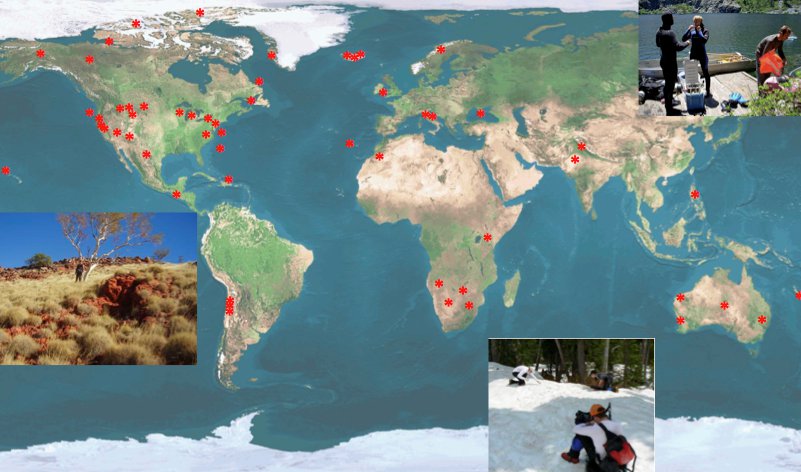
The NASA Astrobiology Institute and the American Philosophical Society are pleased to announce selections for the 2015 Lewis and Clark Fund for Exploration and Field Research in Astrobiology. The graduate students, postdocs, and early-career scientists listed below will engage in field studies in astrobiology, at sites from Idaho to Oman.
Ashley Berg, University of Tennessee at Knoxville will examine “Preservation of Proterozoic Microbial Mats in the Angmaat Formation, Baffin Island, Canada”.
Devon Cole, Yale University will assess “Oxygenation in the Late Mesoproterozoic, Baffin Island, Canada”.
Holly Farris, University of Arkansas, Fayetteville will examine “Survivability of Halophiles through Deliquescence in the Atacama Desert, Chile: Implications for Liquid Water Stability and Habitability of the Martian Surface”.
Rebecca Greenberger, Brown University will engage in “Mapping Mineralogies of Serpentine Seeps at an Ophiolite in Oman: Insights into Microbial Activity”.
Leanne Hancock, University of California, Riverside will collect samples along the California coast to examine “Redox Variation and Nutrient Controls on Monterey Formation Deposition: A Case Study on Methane Cycling in Borderland Basins and Proximity Controls”.
George Kasun, Portland State University will study “Recombination Between RNA and DNA Viruses in an Acidic Hot Spring” in Lassen Volcanic National Park, California.
Cara Magnabosco, Princeton University will conduct “A Comparison of Subsurface Microbial Communities and Function” in northern Portugal.
Charity Phillips-Lander, University of Oklahoma will investigate “Trace Metals as Indicators of Microbially-Induced Weathering in Water-Limited Systems: The Snake River Plain (Idaho) as an Analog for Post-Noachian Weathering on Mars”.
Arpita Roy, Pennsylvania State University will collect data “In the Quest for Habitable Extrasolar Planets: Exploring the full potential of the PARAS Spectrograph in India”.
We look forward to the reports resulting from these exciting trips.