

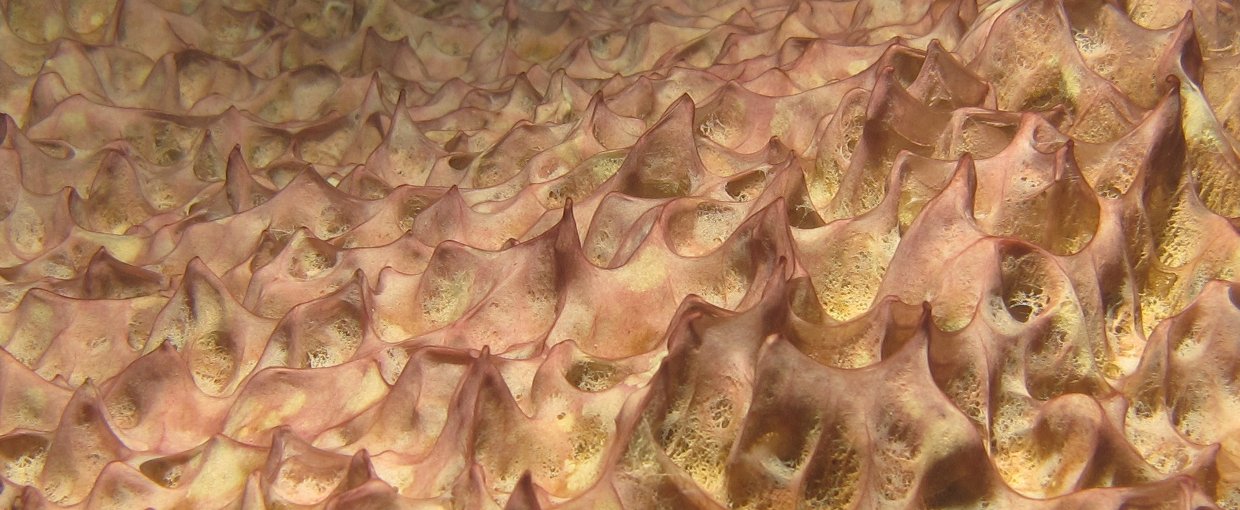
Photo of mats from Lake Joyce.Tyler Mackey
A team of researchers working in Lake Joyce, Antarctica, have studied how mud accumulation affects the growth of microbial mats on the lakebed. Mats growing in areas with low mud accumulation rates developed ‘pinnacles’ as well as more delicate features, such as webs of biofilm between the pinnacles. Microbial mats in areas of high mud deposition were observed to be mostly flat, with few pinnacles.
The findings could have implications for the study of stromatolite types found in the rock record of the Earth. Stromatolite fossils that have delicate biofilm structures are rare, and the study shows that this could be a result of the environment in which they grew and not due to properties of the microbial communities that formed the stromatolites themselves.
The paper, “Increased mud deposition reduces stromatolite complexity,” was published in the journal Geology. The work was supported by NASA Astrobiology through the Exobiology & Evolutionary Biology Program.