Written byMiki Huynh


Jan. 13, 2017
Feature Story
Dives Show Us the Extreme Life in Hydrothermal Environments
In the winter of 2016, two different discovery cruises set out to study hydrothermal environments, sending diving vehicles deep under the ocean to document amazing vent formations and sea life communities that occupy geothermally active spots.
The 2016 Guaymas Basin Cruise
Researchers on the RV Atlantis, a research vessel operated by the Woods Hole Oceanographic Institution, sailed into the Guaymas Basin, a hydrothermal spreading center between Baja California and Mexico, where hydrothermal vents are covered by a thick layer of sediment, creating the additional byproduct of petroleum.
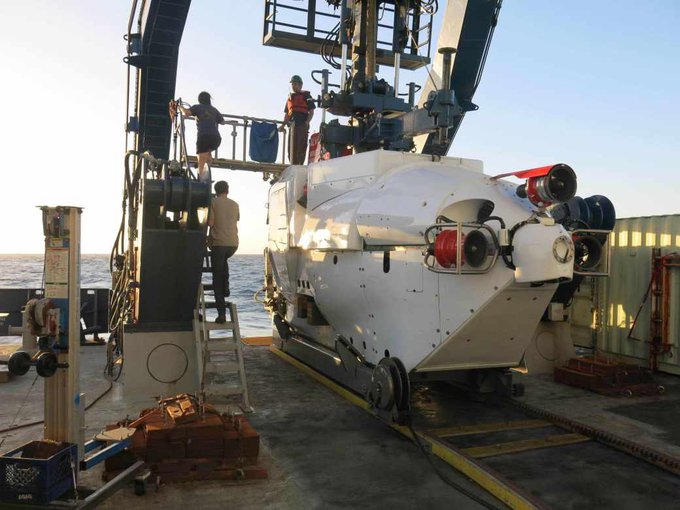
HOV Alvin. Source: Guaymas Basin 2016 / Teske Lab
Over the course of three weeks, the crew of scientists performed twelve dives with the Human Occupied Vehicle, Alvin, collecting samples and capturing images of sediment floor and seep habitats, rocky spires, and native creatures including sea anemones, tube worms, and octopi.
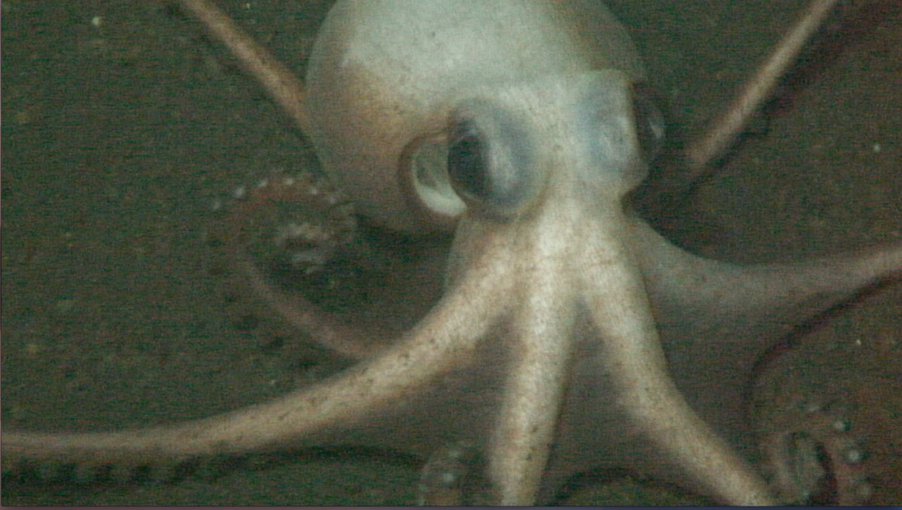
Source: Guaymas Basin 2016 / Teske Lab
Photos and detailed dive by dive accounts from the cruise are available at the 2016 Guaymas Basin Cruise blog, written in both English and Spanish. More pictures and snippets from the cruise were captured on Twitter at #GuyamasBasin.
[ Source: Teske Lab ]
Searching for Life in the Mariana Back-Arc
Revisiting hydrothermal vents first discovered during a cruise back in the winter of 2015, the science team aboard the RV Falkor spent three weeks around the Mariana Trench, the deepest spot on the Earth—at the Daikoku seamount and the back-arc of the Mariana subduction system—capturing footage of unique and very deep chimney formations and the unusual behaviors of crabs and other sea creatures. These observations have led the scientists to question why these back-arc vents and their populations appear different from other hydrothermal vent sites, and what might make these sites in Mariana more difficult to inhabit.
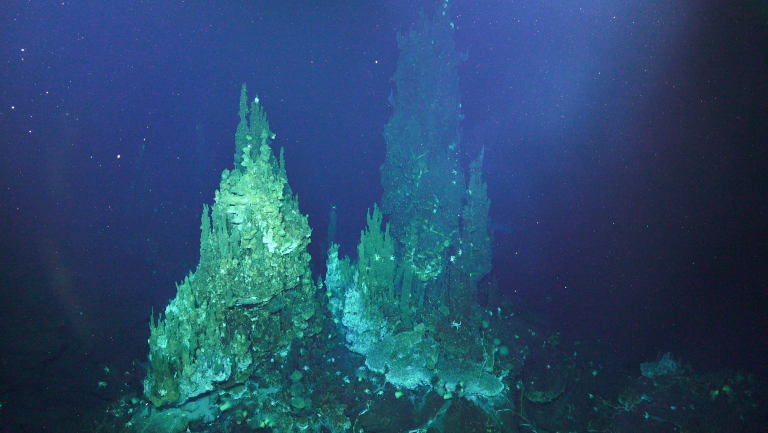
Source: Searching for Life in the Mariana Back-Arc / Schmidt Ocean Institute
Dives were made with the Remotely Operated Vehicle (ROV) SuBastian.
The team produced videos of highlights from the cruise, including a summary of the second week at sea:
The blog of the Mariana Back-Arc cruise is available through the Schmidt Ocean Institute. Links to more images and a recorded livestream from December can be found on Twitter at #HydrothermalHunt.
[ Source: Schmidt Ocean Institute ]