

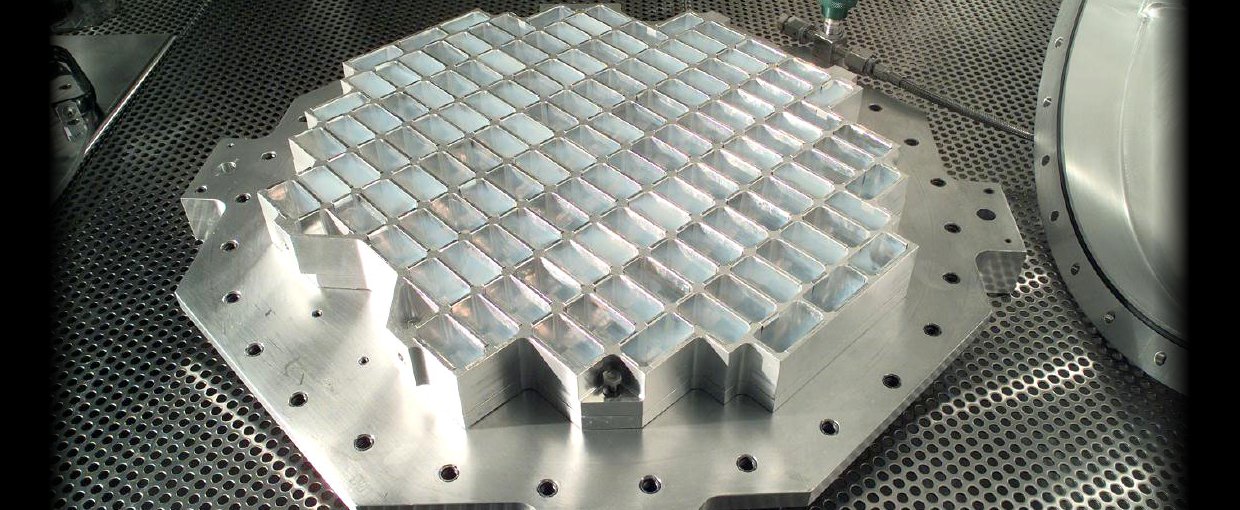
Dust collector with aerogel prior to installation on the Stardust spacecraft.NASA
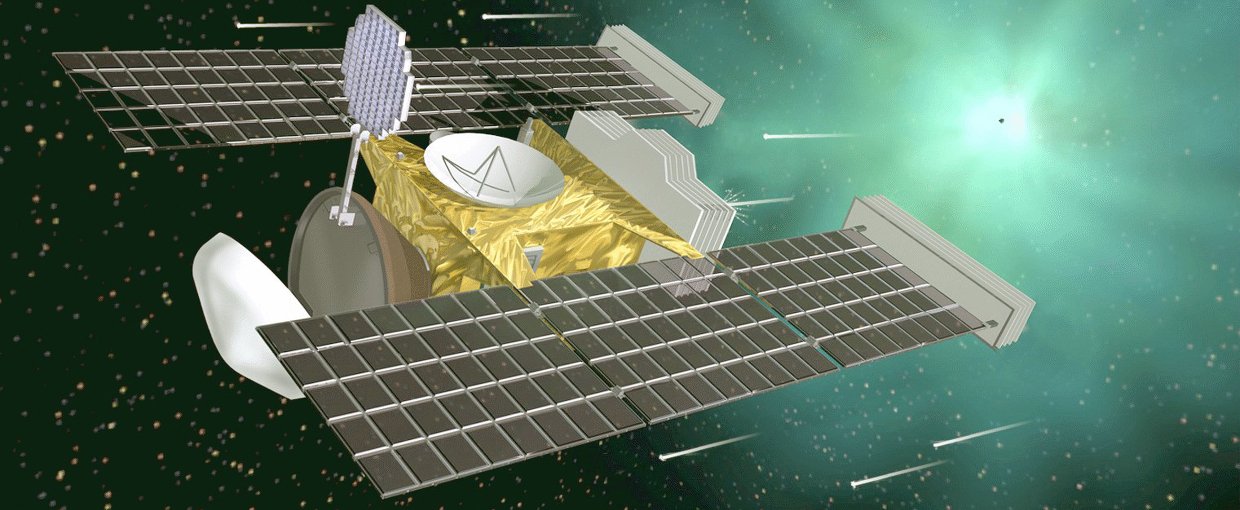
Stardust was the first spacecraft to return a cometary sample and extraterrestrial material from outside the orbit of the moon to Earth.NASA
In 2004, the Stardust spacecraft made a close flyby of comet Wild-2, collecting comet and interstellar dust samples in a substance called aerogel. Scientists have been studying the samples ever since they were returned to Earth in January of 2006.
Previous studies on Stardust samples had identified tiny pieces of gold that are in excess of the element’s cosmochemical abundance. A new study examines the potential origin of this excess gold and suggests that it may be contamination, possibly introduced while processing the particular aerogel tiles in which the gold was found.
The paper, “At the interface of silica glass and compressed silica aerogel in Stardust track 10: Comet Wild 2 is not a goldmine,” was published in the journal Meteoritics & Planetary Science. The work was supported by the NASA Astrobiology Program through the strategic program Laboratory Analysis of Returned Samples (LARS).