Written byAaron Gronstal

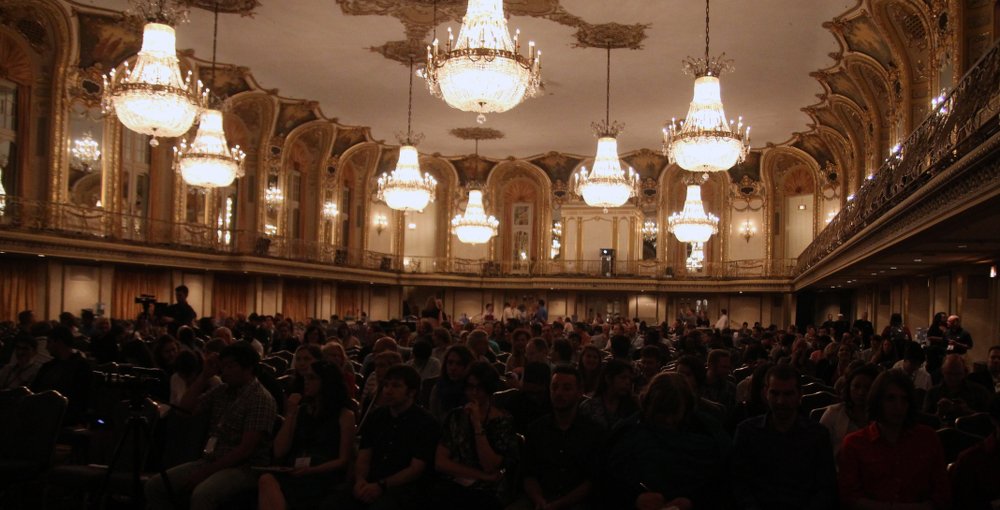
Audiences pack the Grand Hall for the AbSciCon 2015 Regional Heat of the FameLab USA competition. Credit: NASA Astrobiology
Astrobiologists gathered in Chicago, Illinois, from June 15-19th for the 2015 Astrobiology Science Conference (AbSciCon). Researchers from a multitude of disciplines, and representing institutions from around the world, used the conference as a forum to report new discoveries, share data, initiate and advance collaborative efforts, plan new projects, and educate the next generation of astrobiologists.
“AbSciCon reflects the importance of astrobiology in supporting NASA’s current and ongoing missions,” said Mary Voytek, Program Scientist for Astrobiology at NASA.
Peter Doran, the John Franks Endowed Chair at Louisiana State University, served as Conference Chair for AbSciCon 2015 and led a team of over 20 committee members in organizing the five-day conference.
“We put a lot of effort into the program, making sure as many people who wanted to talk could,” said Doran. “The trade off was short talks, but I think it was worth it. We also put a lot of time into keeping overlap to a minimum so that everyone could see what they wanted to see.”
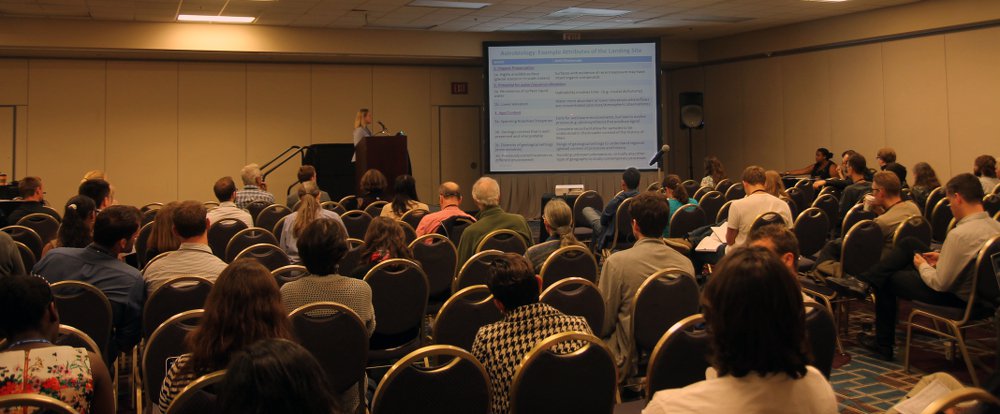
Topical sessions took place throughout the meeting rooms of the Chicago Hilton during the week. Above, Dr. Lindsay Hays of the Mars Program Office at NASA JPL speaks to an audience about astrobiology input into the landing site selection for the upcoming
Talks at this year’s AbSciCon were framed around the theme “Habitability, Habitable Worlds, and Life.”
With over 800 attendees, the conference is one of the largest gatherings on the astrobiology calendar, and requires a team of dedicated people to ensure its success.
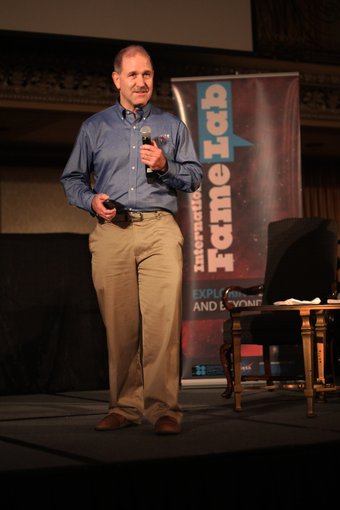
Dr. John Grunsfeld, former astronaut and Associate Administrator for the Science Mission Directorate at NASA, speaks to the audience at AbSciCon 2015. Credit: NASA Astrobiology
“Mary Voytek did a lot behind the scenes,” said Doran. “Elizabeth Wagganer and other folks at the Universities Space Research Association (USRA) were also great in handling the logistics. In addition, there was a subset of the organizing committee appointed as “theme leads” that were instrumental in the conference’s success.”
Theme leads included Shawn Domagal Goldman (NASA Goddard Institute for Space Studies(GISS)), Jim Kasting (Penn State University), Britney Schmidt (Georgia Tech), Frank Rosenzweig (University of Montana), Tim Lyons (University of California, Riverside), Charlie Cockell (University of Edinburgh) and Daniella Scalice (NASA Astrobiology, Paragon Tech). Each lead was in charge of organizing a plenary session on a conference theme, and served as the point person for the sessions that were organized under each category.
The historic Hilton hotel in downtown Chicago served as the venue for this year’s AbSciCon, with the first round of the regional FameLab competition being held at Chicago’s world-renowned Field Museum.
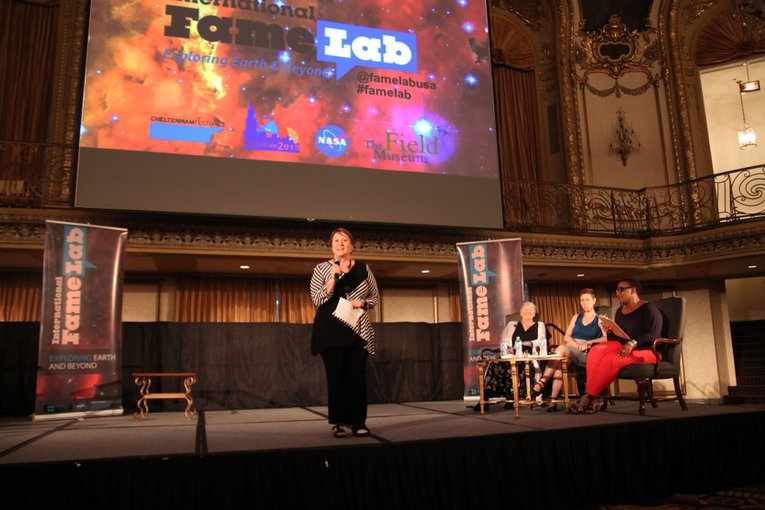
Mary Voytek, Program Scientist for Astrobiology at NASA, opens the AbSciCon 2015 Regional Heat of the FameLab USA competition. Credit: NASA Astrobiology
“I think the venue shined,” said Doran. “We initially were thinking something more campus-oriented, but I’m glad we went with the Hilton. The history, location, and efficiency of the staff were all great. Having the Stanley Cup at the same time was a cool addition. Chicago showed well.”
Institutional Support for AbSciCon came from the Universities Space Research Association (USRA), the Lunar and Planetary Institute (LPI) and the National Aeronautics and Space Administration (NASA).
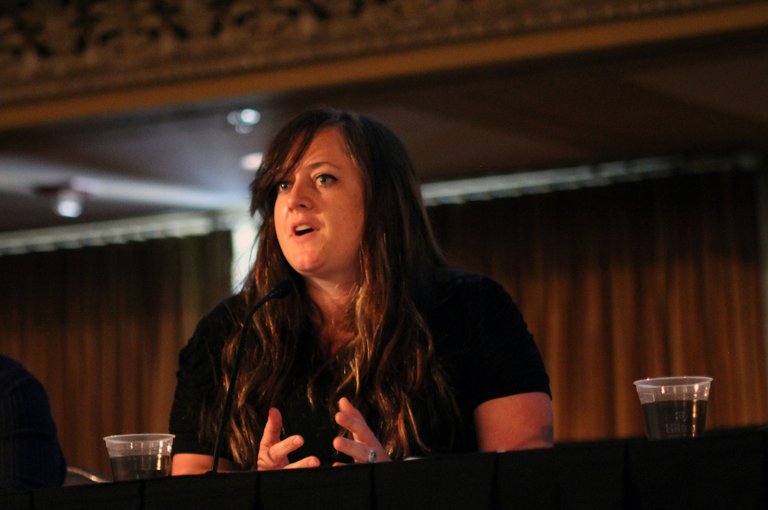
Dr. Britney Schmidt of Georgia Tech discusses the search for life in the Solar System and beyond during an event at AbSciCon 2015.Image credit: NASA Astrobiology.
Sponsors included the Earth-Life Science Institute (ELSI) at the Tokyo Institute of Technology, Smart Sparrow, Blue Marble Space, and the University of Montana.
If you missed a talk at AbSciCon 2015, or were unable to attend, all plenary sessions and some afternoon sessions were recorded and are available on demand. Check out all of the archived presentations below:
https://astrobiology.nasa.gov/seminars/featured-seminar-channels/conferences-and-workshops/2015/6/15/abscicon-2015/