

April 26, 2016
Research Highlight
Ancient volcanoes could be key to predicting impact of climate change
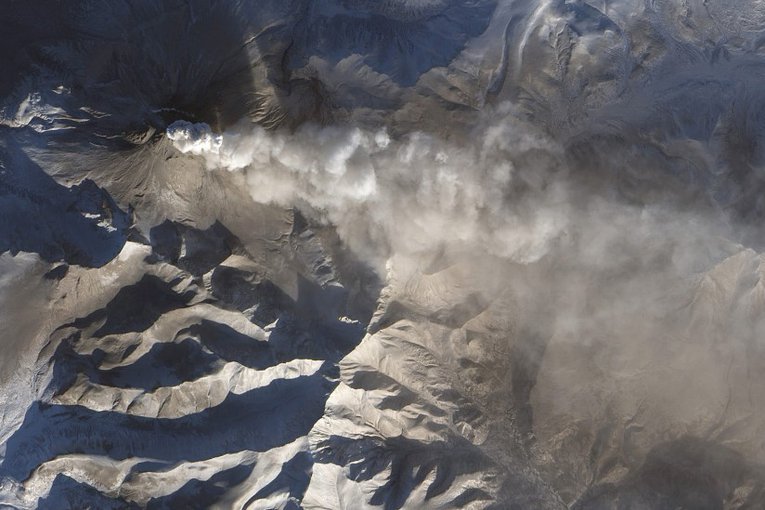
Researchers think emissions from volcanos, such as the one seen here, may have led to a dramatic rise in CO2 leading to a mass extinction 200 million years ago. (Photo/NASA Earth Observatory)
Just over 200 million years ago, long before the demise of the dinosaurs, a cataclysm killed off a significant chunk of the planet’s animal life. The leading theory implicates massive volcanic eruptions, triggered when the supercontinent of Pangea was ripped apart into separate continents.
A new study co-authored by USC researchers, including Yadira Ibarra, NAI/APS Lewis and Clark Fund for Exploration and Field Research in Astrobiology awardee, strengthens evidence for that theory and has wider implications for how rapid climate change can affect life on Earth. Along with lava flows, the volcanic eruptions released massive amounts of the greenhouse gas carbon dioxide, creating havoc in the ecosystem.
The study, published April 6 in USC News article here.