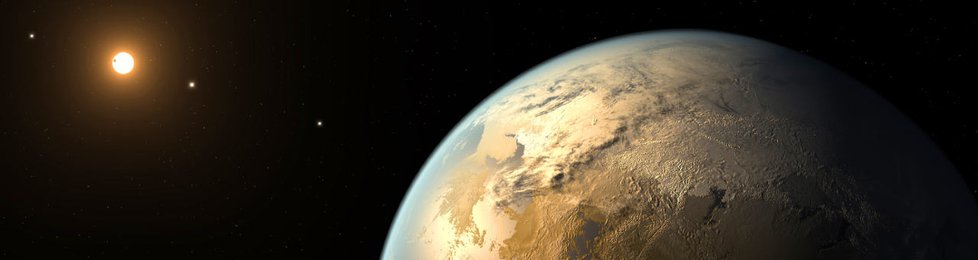
Three billion years ago, Earth was a very different place.



-
The NASA Astrobiology Institute Concludes Its 20-year Tenure

The NASA Astrobiology Program has announced a bold new structure to mobilize the astrobiology community towards both impacting future NASA space missions and answering the fundamental questions of; How does life begin and evolve? Does life exist elsewhere in the Universe? How do we search for life in the Universe? This new approach includes a system of virtual collaboration consisting of “Research Coordination Networks” (RCNs). These RCNs are designed to enable the research community to self-organize, collaborate, communicate, and network across organizational, divisional, and geographical boundaries. This new structure will be replacing the NASA Astrobiology Institute (NAI) as ...
December 20, 2019 • Posted by: Yael Kovo • Report issue
-
Global Geomorphologic Map of Titan
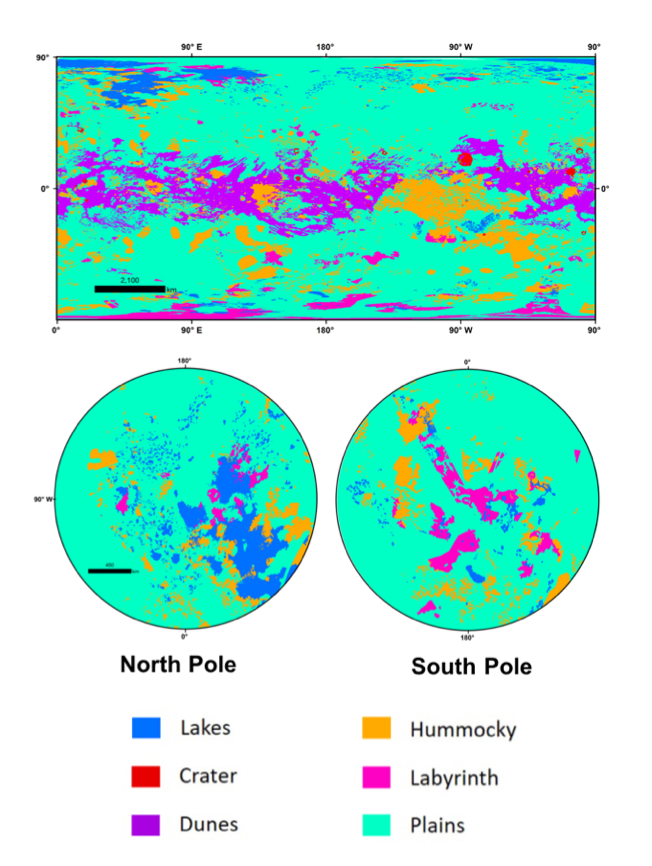
The first global geomorphologic map of Titan has been published.
Titan’s thick and hazy atmosphere has hindered the identification of its geologic features at visible wavelengths, so scientists combined all the available datasets from Cassini (RADAR, VIMS, ISS) to create the map. Correlations between datasets enabled them to produce a global map even where datasets were incomplete.
Titan has an active methane-based hydrologic cycle that has shaped a complex geologic landscape, making its surface one of most geologically diverse in the Solar System. Despite the differences in materials, temperatures and gravity fields between Earth and Titan, many of their ...
Source: [Nature Geosciences]
December 18, 2019 • Posted by: Yael Kovo • Report issue
-
Molecular Cousins Discovered on Titan
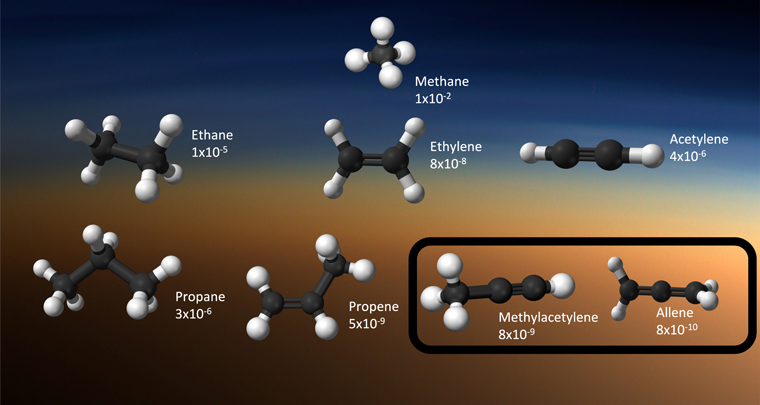
Neutral C1, C2, and C3 hydrocarbons of Titan's atmosphere and their approximate volume mixing ratios at 200 km derived. Credit: Vinatier et al. (2015).The atmosphere of Titan, the largest moon of Saturn, is rich in organic molecules, and it has been suggested that the moon may serve as an analog for the pre-biotic Earth due to its highly reducing chemistry and existence of global hazes. Photochemical models of Titan have predicted the presence of propadiene (historically referred to as allene), CH2CCH2, an isomer of the well-measured propyne (also called methylacetylene) CH3CCH, but its detection has remained elusive due to insufficient spectroscopic knowledge of the molecule.
The Cassini spacecraft explored the Saturn system from 2004 through 2017, during which ...
Source: [The Astrophysical Journal Letters]
December 13, 2019 • Posted by: Yael Kovo • Report issue
-
Interdisciplinary Consortia for Astrobiology Research (ICAR)
ROSES-19 Amendment 53: This amendment releases final text and due dates for program element C.23
Interdisciplinary Consortia for Astrobiology ResearchProposals for Interdisciplinary Consortia for Astrobiology Research (ICAR) must describe an interdisciplinary approach to a single compelling question in astrobiology, and address at least one aspect of the 2015 Science Strategy. Team size and resources requested should be appropriate to the scale of the proposed research. There is no ideal size of an ICAR Team. Because this is an opportunity for larger teams and for five years of support, the scope of the research, and subsequently the resources ...
December 04, 2019 • Posted by: Yael Kovo • Report issue
-
The NASA Astrobiology Science Forum Talks Now on YouTube
Credit: Miki HuynhRecordings from the NASA Astrobiology Science Forum: The Origin, Evolution, Distribution and Future of Astrobiology, which was held at the NASA Ames Research Center, on November 14, 2019 are now available for viewing.
NASA Astrobiology Science Forum Part 1: The Origin
NASA Astrobiology Science Forum Part 2: Evolution: Developing the Community and Science
NASA Astrobiology Science Forum Part 3: The Future 1
NASA Astrobiology Science Forum Part 4: The Future 2
Source: [YouTube]
November 19, 2019 • Written by: Yael Kovo • Report issue
-
The NASA Astrobiology Science Forum: The Origin, Evolution, Distribution and Future of Astrobiology
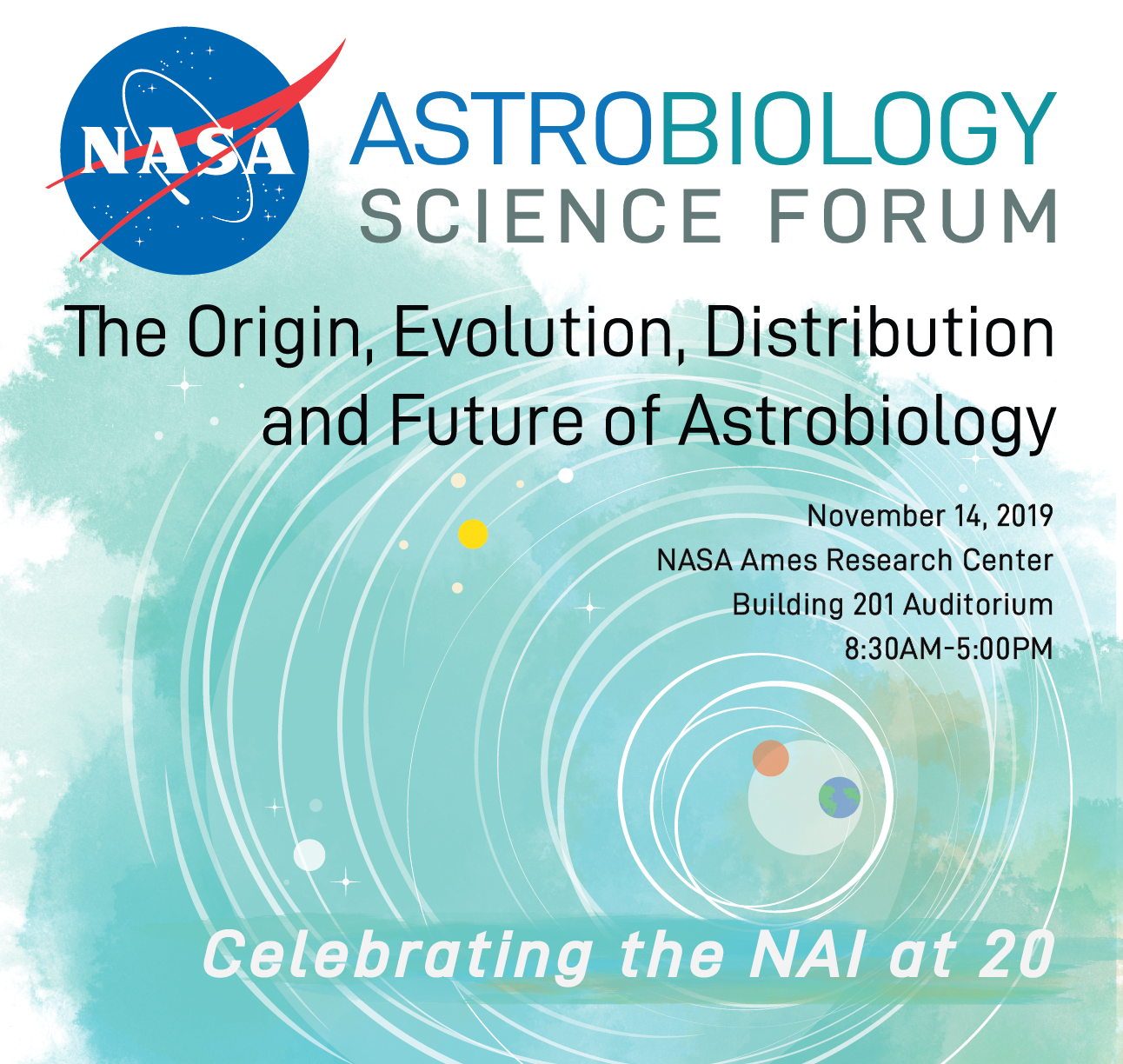
Credit: Miki HuynhWhen: November 14, 2019 8:30AM – 5:00PM PST
Celebrating the NAI at 20
Join us on November 14th to celebrate the NASA Astrobiology Institute (NAI) at 20. As the NAI completes its 20-year tenure, we remember the origin of astrobiology, the impact of the NAI to the field of astrobiology, share the current development of the field, and discuss the future direction of astrobiology at NASA, the Ames Research Center, and the broader community.
The Astrobiology Science Forum will highlight Ames’ exobiology and astrobiology enterprise, NASA’s role as the host of the NAI; and share how ...
Source: [NASA Ames Research Center]
November 07, 2019 • Written by: Yael Kovo • Report issue
-
Alternative Earths
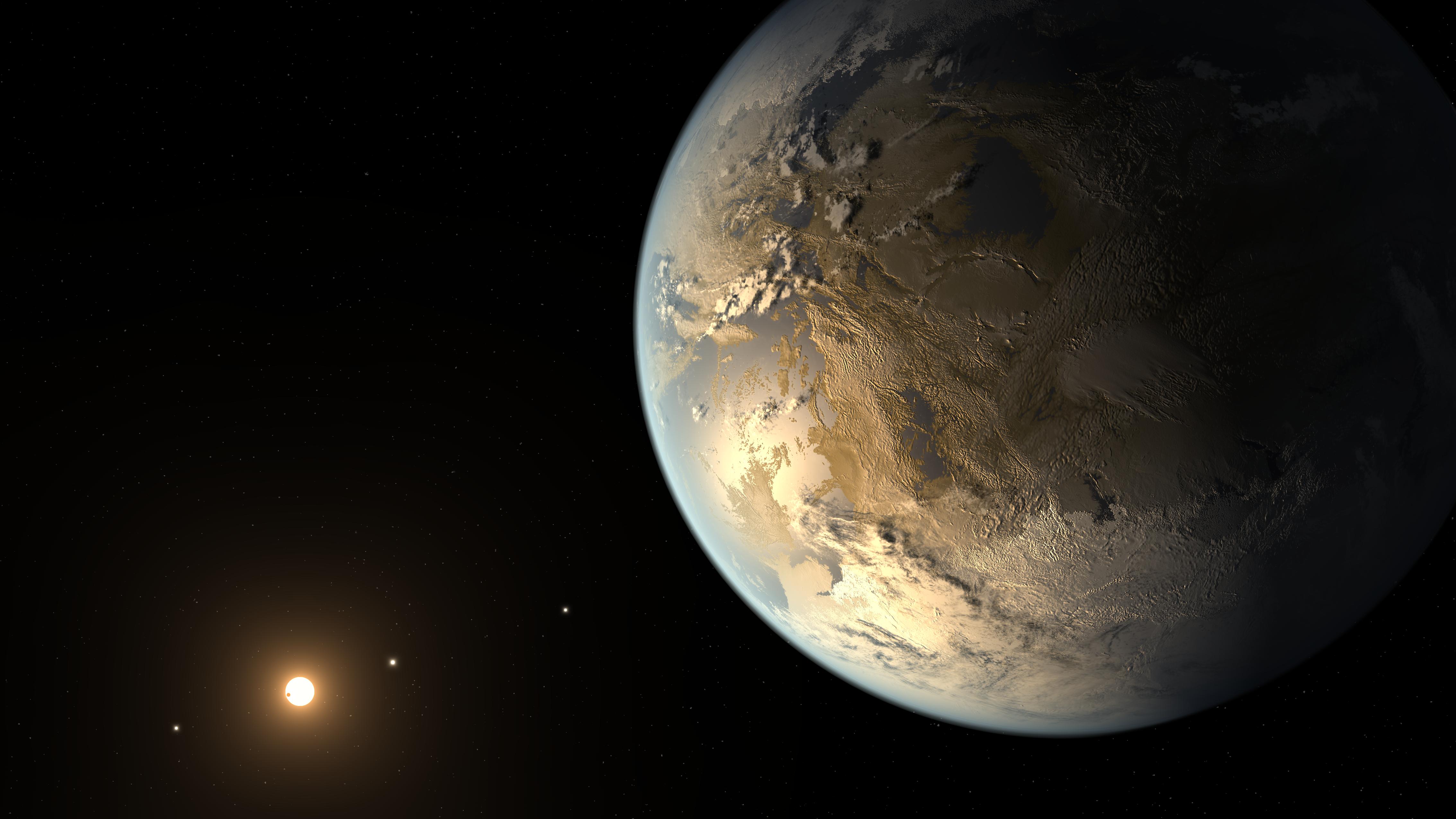
An artist’s impression of the rocky exoplanet Kepler-186f, which is one of the most promising candidates for a planet could potentially be habitable, but how similar or different does it have to be compared to Earth to be able to support life? Image credit: NASA/Ames/SETI Institute/JPL–Caltech.Three billion years ago, Earth was a very different place. The sun that shone on its oceans and continents was not as bright as it is today, and rather than the oxygen-rich atmosphere humans need to survive, methane played a much bigger role in the gas layer that encased our young planet. Despite their differences, this early Earth and our current one have something important in common: they could both support life.
For much of its existence, Earth has been inhabited. But if researchers remotely analyzed the atmosphere of that young Earth, they might have missed the evidence for life ...
October 01, 2019 • Written by: Sarah Wild • Report issue
-
Drilling for Rock-Powered Life
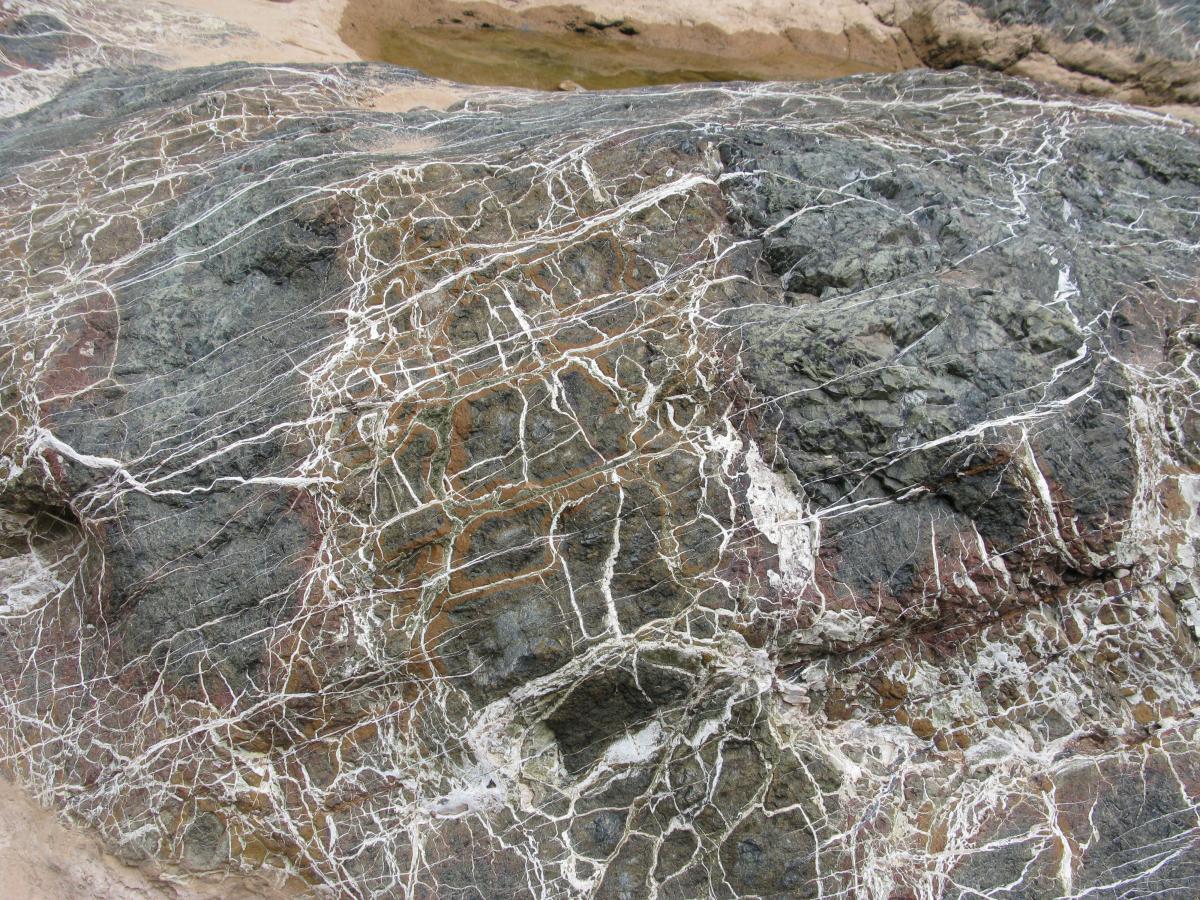
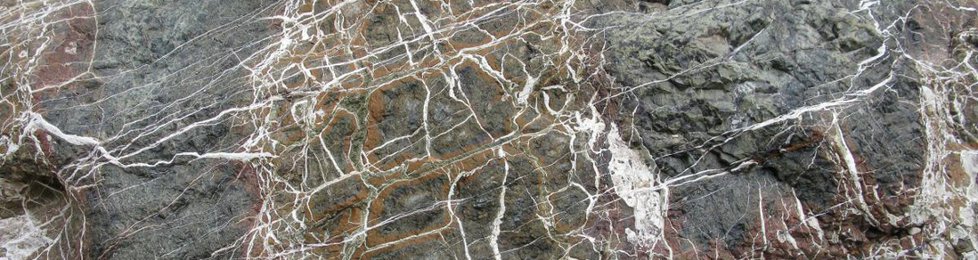
Visible fractures in exposed lithospheric rock in Oman. Credit: University of Colorado, Boulder.A slab of ancient sea bed in Oman could guide scientists’ search for extraterrestrial life.
Hundreds of meters under the surface of a rocky valley in Oman, the sultanate on the south-eastern coast of the Arabian Peninsula, microbes are thriving even though there is no oxygen. In the past, and in fact until quite recently, scientists thought that oxygen was vital for life, but unique habitats around the world are increasingly showing that life is more diverse than we initially expected – and might be found in many more places than had previously been assumed.
The valley, known as the Semail ...
September 26, 2019 • Posted by: Sarah Wild • Report issue
-
Imagining a Living Universe
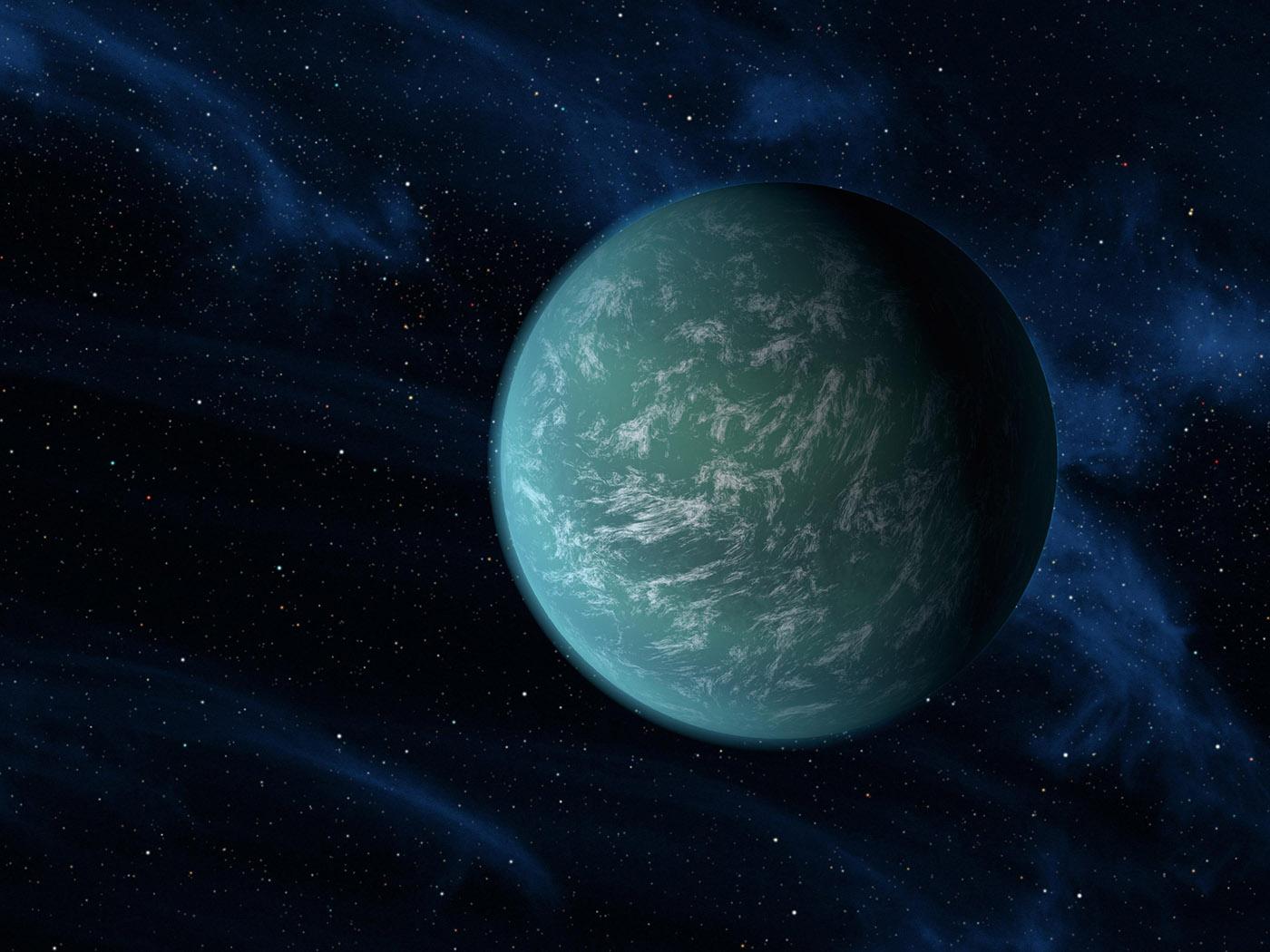
Illustration of the exoplanet Kepler 22-B. Credit: NASA, AMES and JPL-CaltechThe SETI Institute asks big questions: What is life? How does it begin? Are we alone?
Nathalie Cabrol, Director of the Carl Sagan Center at the SETI Institute and the PI at the NAI SETI Institute team, challenges us to think deeper and to question our assumptions in a recent piece for Scientific American. “Science is without a doubt increasingly better at characterizing what life does with each passing day,” said Cabrol. “But brings comparatively fewer advances to the identification of what life is and how it originates.” She suggests the limits we place on the nature of ...
Source: [SETI Institute]
September 24, 2019 • Written by: SETI Institute • Report issue
-
Workshops Without Walls: Astrovirology

Photo illustration by Natalie Matthews-Ramo. Photos by maciek905/Thinkstock and Thinkstock.Dates: Wed, Sept 18 8:00AM – 12:00PM and Thurs, Sept 19 1:00PM – 5:00PM
The National Aeronautics and Space Administration (NASA) Astrobiology Institute (NAI) is hosting a virtual Workshop Without Walls on Astrovirology to review and advance the science of understanding what a virus is, their origin, ecology, impact on evolution, and their role in exobiology as a biosignature.
This virtual workshop will be over two half-days to enabled global scientific exchange with no attendance costs or travel required. Topics covered will presented in a manner to reach a range of scientific understanding including students, researchers, educators, science ...
September 12, 2019 • Written by: Yael Kovo • Report issue
-
Rutgers Researchers Identify the Origins of Metabolism
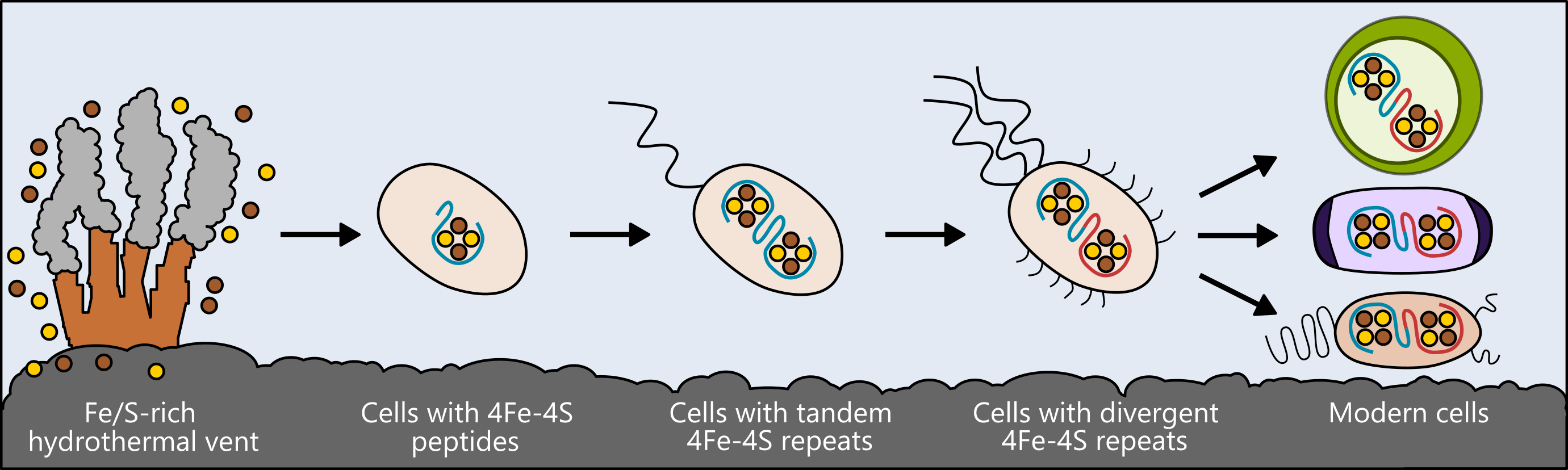
Life may have arisen near hydrothermal vents rich in iron and sulfur. The earliest cells incorporated these elements into small peptides, which became the first and simplest ferredoxins – proteins that shuttle electrons within the cell, to support metabolism. As cells evolved, ferredoxins mutated into more complex forms. The ferredoxins in modern bacteria, plant and animal cells are all derived from that simple ancestor. Credit: Ian Campbell, Rice UniversityA Rutgers-led study sheds light on one of the most enduring mysteries of science: How did metabolism – the process by which life powers itself by converting energy from food into movement and growth – begin?
To answer that question, the researchers reverse-engineered a primordial protein and inserted it into a living bacterium, where it successfully powered the cell’s metabolism, growth and reproduction, according to the study in Proceedings of the National Academy of Sciences.
Source: [Rutgers Today]
September 03, 2019 • Written by: Neal Buccino • Report issue
-
Ramparts Discovered Around Titan Lakes
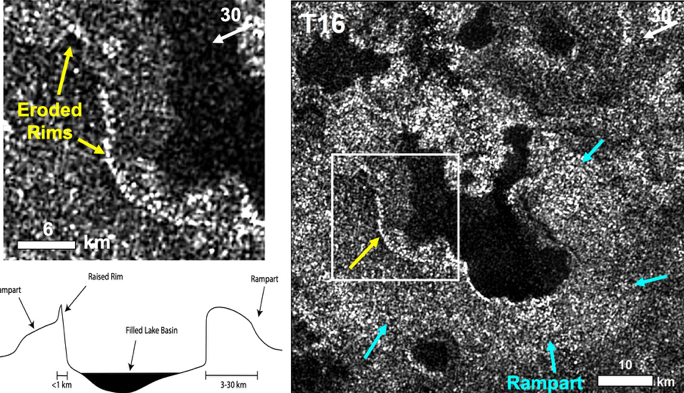
Right: T16 SAR image of Viedma Lacus. Cyan arrows denote portions of the perimeter of the rampart feature, a SAR-bright apron that encloses nearly the entire lake. Yellow arrows denote portions of the raised rim. Top Left: Zoom into the raised rim portion of the lake perimeter, denoted by the white box in the right image. The rim appears eroded in multiple sections; Bottom Left: Conceptual model of a lake with a rampart and rim (not to scale).Cassini observations of Titan have revealed ~650 polar lakes and seas. Modeling efforts, supported by Cassini data, suggest the liquid composition to be a mixture of methane/ethane with a contribution of dissolved nitrogen. The surface of Titan has abundant carbon-rich molecules (hydrocarbons) that have been shown to form amino acids, the building blocks of proteins needed for life, when exposed to liquid water in laboratory simulations.
Lake formation remains an open question in Titan science. The discovery of ramparts around a few of these lakes might help shed light on the formation of Titan’s lakes in general and ...
Source: [Icarus]
August 27, 2019 • Posted by: Yael Kovo • Report issue
-
Interdisciplinary Consortia for Astrobiology Research (ICAR) Schedule Update
The bold notice at the top of C.23 Interdisciplinary Consortia for Astrobiology Research has been updated to note that final text of that program element will be released by October, 2019.
Step-2 proposals will be due no fewer than 90 days after release of the final text.
Questions regarding this (TBD) program element may be directed to Mary Voytek.
The Planetary Science Division intends to solicit Interdisciplinary Consortia for Astrobiology Research (ICAR) to support the goal of the NASA’s Astrobiology program in the study of the origins, evolution, and distribution of life in the Universe. PIs selected as ...
August 21, 2019 • Posted by: Yael Kovo • Report issue
-
AbGradCon 2019
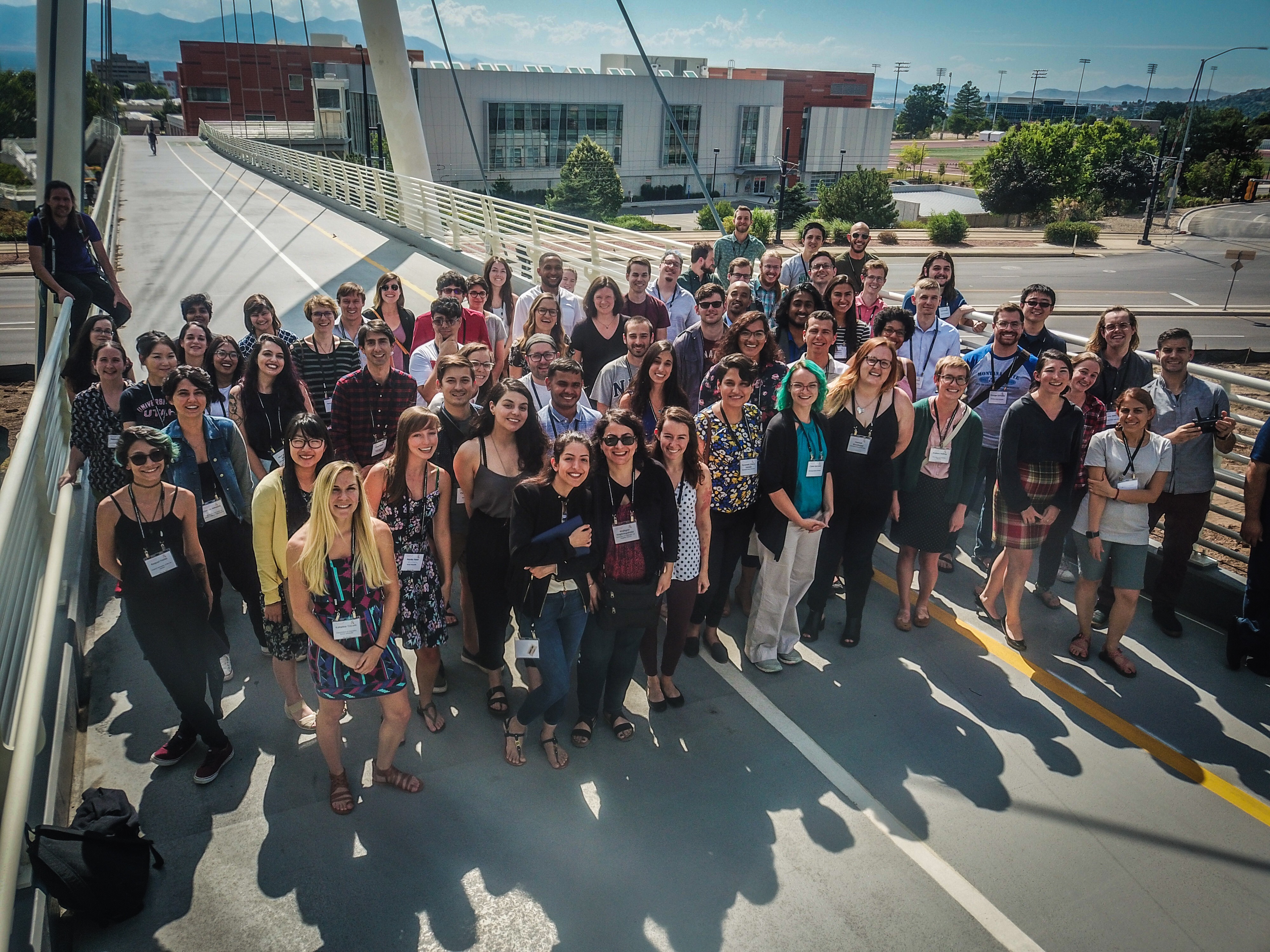
The 15th Astrobiology Graduate Conference (AbGradCon) was held from July 22-26, 2019 at the University of Utah in Salt Lake City, Utah, with 75 participants presenting 31 talks and 44 posters.
The attendees were graduate students, postdoctoral scholars, and select undergraduate students from 47 institutions in 7 different countries (Australia, Brazil, Canada, France, Israel, Japan, and the United States). In addition to the scientific program, the attendees gathered for informal networking and social activities each night and an educational field trip to the Timpanogos Cave National Monument on the last day of the conference, which included a lecture on ...
August 13, 2019 • Written by: Rebecca Rapf • Report issue
-
Scientists Discover a New Method for Exploring Europa’s Extraterrestrial Ocean
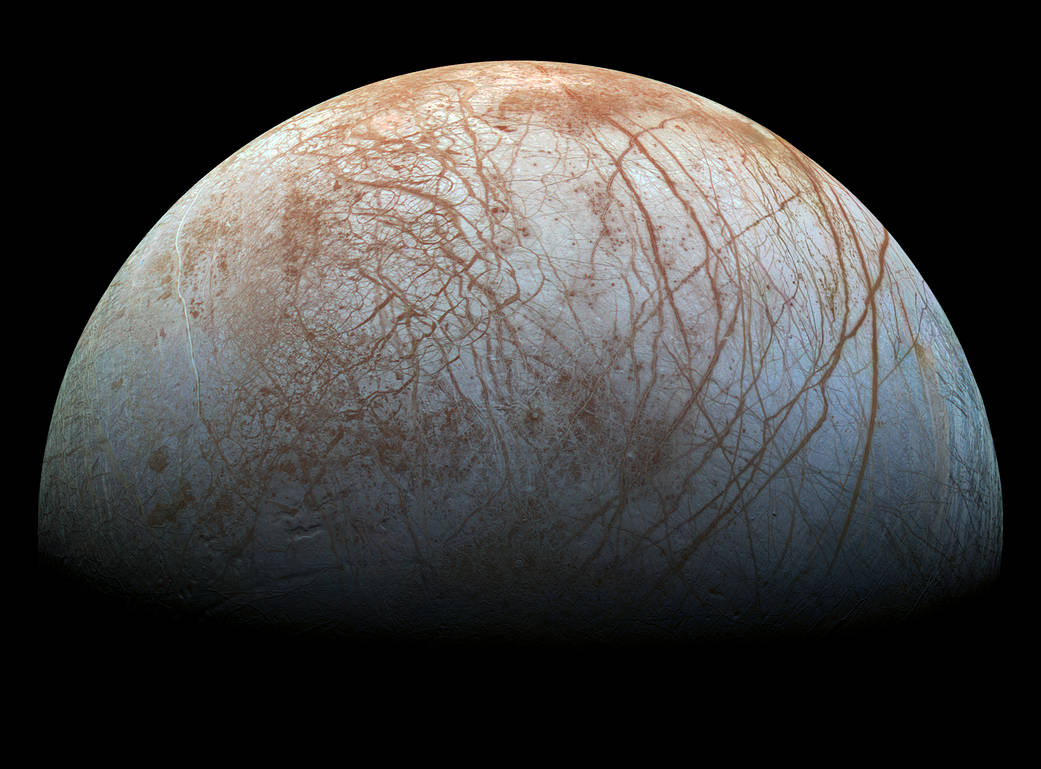
Europa's stunning surface, which may hold clues to the characteristics of the oceans hidden underneath. Image Credit: NASA/JPL-Caltech/SETI InstituteEarth is a world of astonishing biodiversity. Yet, despite the extreme variety of lifeforms on our planet, there is one key trait all life here shares: none of it can survive without water. This is why, when scientists scour the cosmos for potentially habitable worlds, the presence of liquid water is one of the most alluring traits a celestial object can exhibit.
390 million miles away from Earth, an icy moon harbors an abundance of liquid water just below its frozen surface. Jupiter’s moon Europa is home to an extraterrestrial sea that’s billions of years old, and may ...
Source: [Icarus]
August 12, 2019 • Written by: Glorie Martinez • Report issue